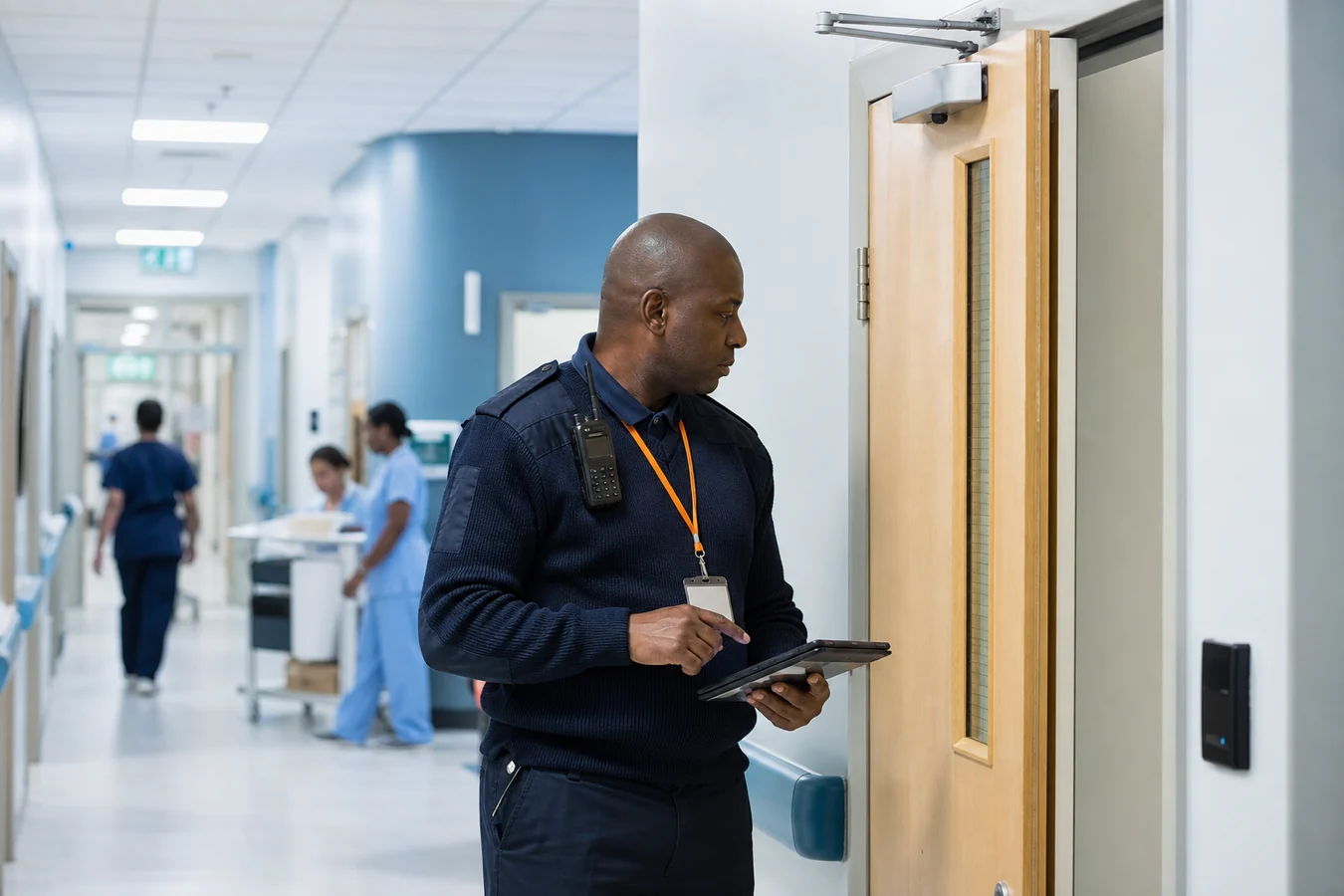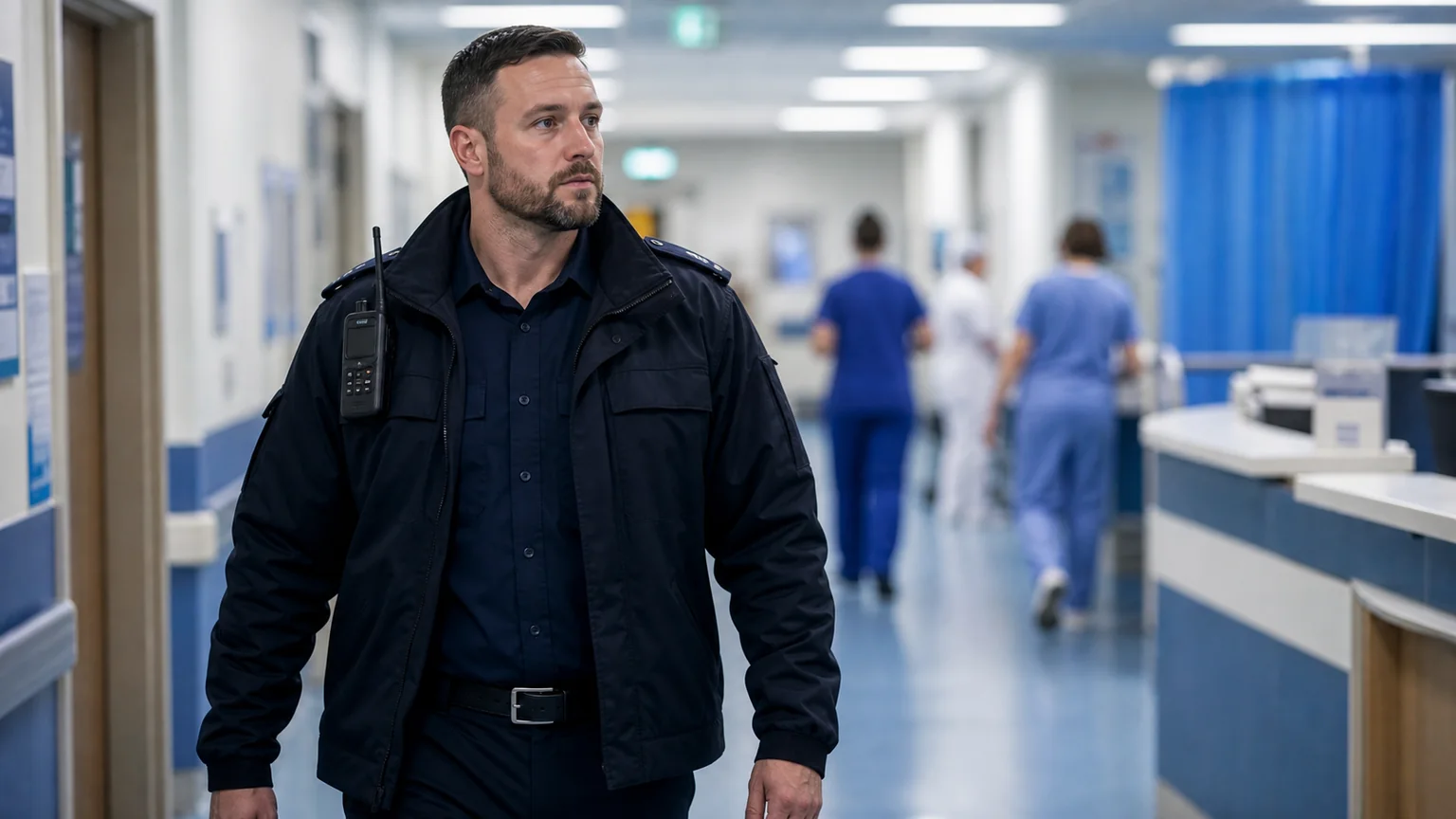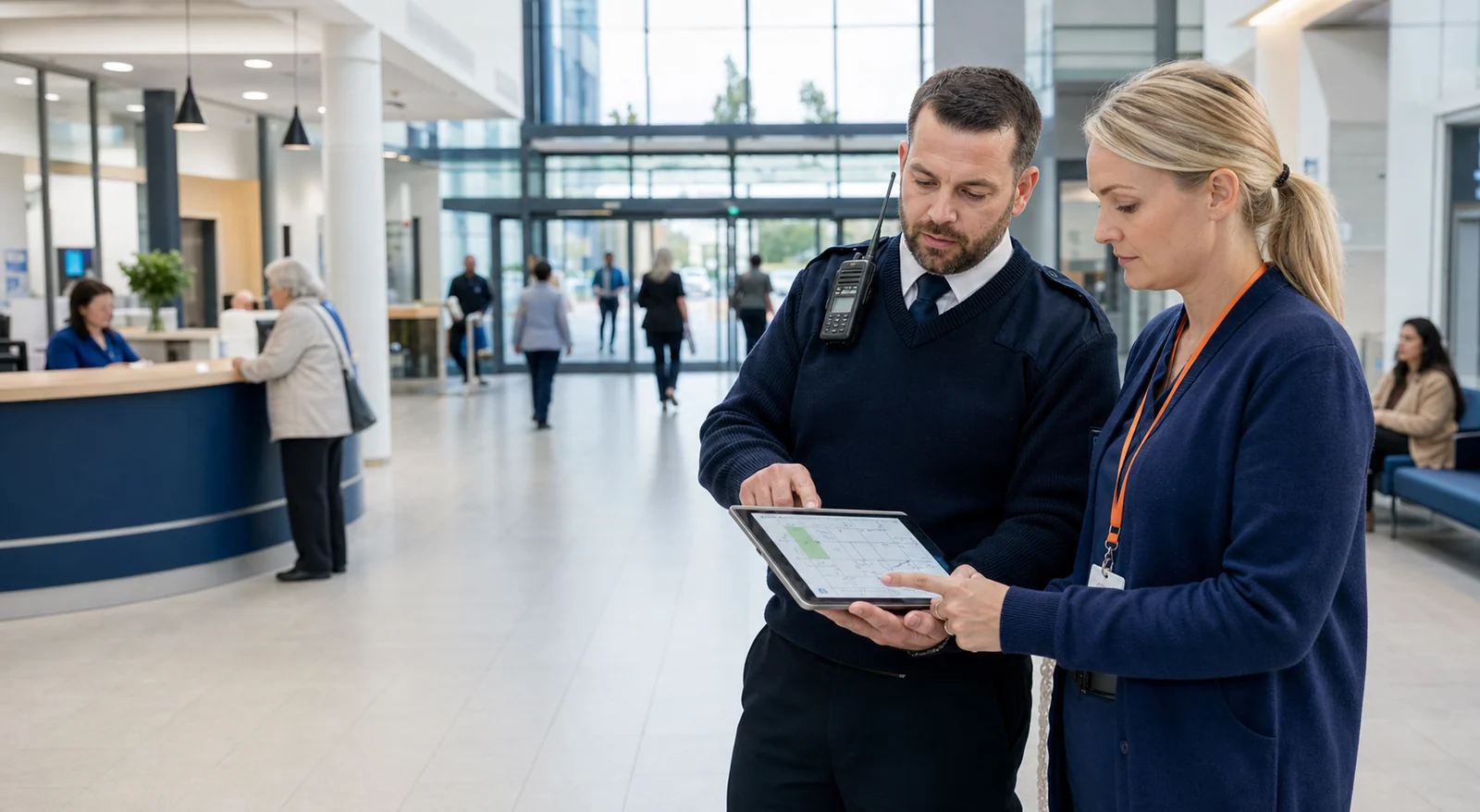
Walk into almost any NHS hospital today and you will find the security team dealing with far more than traditional security work.
They are responding to violence and aggression, supporting mental health incidents, locating missing patients, managing disruptive visitors, assisting clinical teams during behavioural crises, dealing with safeguarding concerns, supporting emergency responses, and often acting as the last line of defence when situations begin to deteriorate.
The role has changed dramatically.
Yet despite the increasing demands placed on healthcare security teams, one uncomfortable reality remains:
Security officers are often expected to manage the consequences of problems they did not create.
The numbers tell a story
Violence against NHS staff remains a significant challenge across the healthcare system.
The 2025 NHS Staff Survey national results provide insight into the experiences of more than 760,000 people working in the NHS. Recent staff survey results continue to show that physical violence, harassment, bullying, and abuse remain serious concerns for healthcare organisations.
Those figures are concerning on their own.
What they do not always explain is why incidents occur in the first place.
It is easy to look at an aggressive incident and conclude that security needs more officers, more training, or more powers.
Sometimes that is true.
Often, however, the roots of the problem started long before security was called.
Violence rarely appears out of nowhere
Most healthcare security professionals will recognise the pattern.
A patient has been waiting for several hours.
A relative feels communication has been poor.
Someone is worried, frightened, frustrated, or confused.
Tensions build.
Expectations are not met.
A disagreement develops.
Eventually security gets called.
From the outside, it may appear that security is dealing with a violent incident. In reality, they are often dealing with the final stage of a much larger process.
That is not a criticism of clinical staff.
Nor is it an excuse for abusive behaviour.
It is simply recognising that aggression in healthcare environments is frequently driven by a combination of stress, anxiety, illness, intoxication, mental health issues, environmental pressure, and operational delay.
Security officers are often the people who arrive when all of those factors finally collide.
The expanding role of healthcare security
Historically, hospital security was often viewed as a protective function.
Control access.
Patrol the site.
Respond to incidents.
Protect property.
Those responsibilities still exist.
But the modern healthcare security officer is increasingly expected to be a communicator, problem-solver, conflict manager, risk assessor, and professional witness.
On any given shift, a security officer may need to:
- De-escalate a distressed relative.
- Support a confused patient attempting to leave a ward.
- Assist staff during a behavioural crisis.
- Coordinate with police.
- Manage an aggressive visitor.
- Support safeguarding processes.
- Preserve evidence following an assault.
- Reassure frightened members of the public.
Few of those tasks can be solved through physical presence alone.
They require judgement, communication, and experience.
That is why resources such as the Recognising Violence & Aggression Early guide, 12 De-Escalation Phrases guide, and Dynamic Risk Assessment Guide are useful: they support the observation, communication, and structured thinking officers need before situations become harder to manage.
Why security cannot solve violence alone
One of the biggest misconceptions in healthcare is that violence prevention sits solely with the security department.
It does not.
The NHS Violence Prevention and Reduction Standard sets out an organisation-wide approach to preventing and reducing violence. Its updated version reinforces the need for structured work across NHS organisations rather than relying only on reactive responses.
That matters because many factors contributing to aggression sit outside the security team’s direct control.
Examples include:
- Long waiting times.
- Poor communication.
- Environmental design.
- Staffing pressures.
- Mental health service delays.
- Overcrowded departments.
- Lack of clear expectations for visitors.
Security teams can help manage the outcome.
They cannot solve all of the causes.
A hospital that relies solely on security officers to reduce violence is asking one department to compensate for challenges across the wider organisation.
Training is part of the answer
If violence prevention is everyone’s responsibility, then training cannot be limited to security staff.
Security officers undoubtedly need strong conflict management and de-escalation skills.
However, reception teams, ward staff, managers, and clinical teams also benefit from understanding:
- Early warning signs of aggression.
- Effective communication techniques.
- Trigger factors.
- Reporting processes.
- Personal safety principles.
- Escalation pathways.
The earlier an issue is recognised, the greater the chance of preventing it from becoming a security incident.
Good training creates confidence.
Confident staff tend to communicate better, identify risks earlier, and seek support before situations escalate.
Reporting matters more than many people realise
Another challenge is under-reporting.
Incidents that are never recorded are incidents that cannot be analysed.
Without accurate reporting, organisations struggle to identify trends, allocate resources, or justify investment in violence reduction measures.
Every report helps build a clearer picture of where risks exist, what support staff need, and which areas of the organisation may need closer attention.
For security teams, good reporting is also a professional safeguard. A clear account of what happened, what was seen, what action was taken, and what the outcome was can support supervisors, investigations, learning reviews, and future risk management.
That is where the Healthcare Security Incident Report Writing Guide connects directly with violence reduction. Better reports help organisations see patterns, not just isolated events.
Communication during incidents matters too
When incidents are unfolding, communication can quickly become the difference between a coordinated response and a confused one.
Radio messages, escalation calls, handovers, and updates to clinical colleagues all shape how quickly people understand what is happening and what support is needed.
The Professional Radio Procedure & Etiquette guide supports this part of the picture. Violence reduction is not only about what officers say to patients or visitors. It is also about how teams communicate with each other under pressure.
Supporting the people behind the uniform
Healthcare security officers regularly deal with situations that are emotionally demanding.
Aggression, threats, and confrontation are often treated as routine parts of the job.
They should not be.
When discussing violence reduction, organisations should not only focus on protecting clinical staff. They should also consider the wellbeing of security teams who are repeatedly exposed to challenging incidents.
Training, supervision, incident reviews, and post-incident welfare processes all matter.
So does the simple act of recognising that security officers are not just a response function. They are people working at the sharp end of organisational pressure.
Looking forward
The reality is that healthcare security teams are being asked to do more than ever before.
Not because security risks have changed in isolation.
Because healthcare itself has changed.
Hospitals are busier.
Patients are presenting with increasingly complex needs.
Mental health pressures continue to grow.
Public expectations are higher.
Staffing pressures remain significant.
As a result, security officers are frequently operating at the intersection of healthcare, public safety, and crisis management.
That makes their role more important than ever.
But it also reinforces a crucial point:
Violence reduction is not a security problem.
It is an organisational challenge that requires leadership, training, communication, reporting, support, and partnership across the entire healthcare system.
Security teams are a critical part of the solution.
They just should not be expected to carry the responsibility alone.