Notice meaningful change
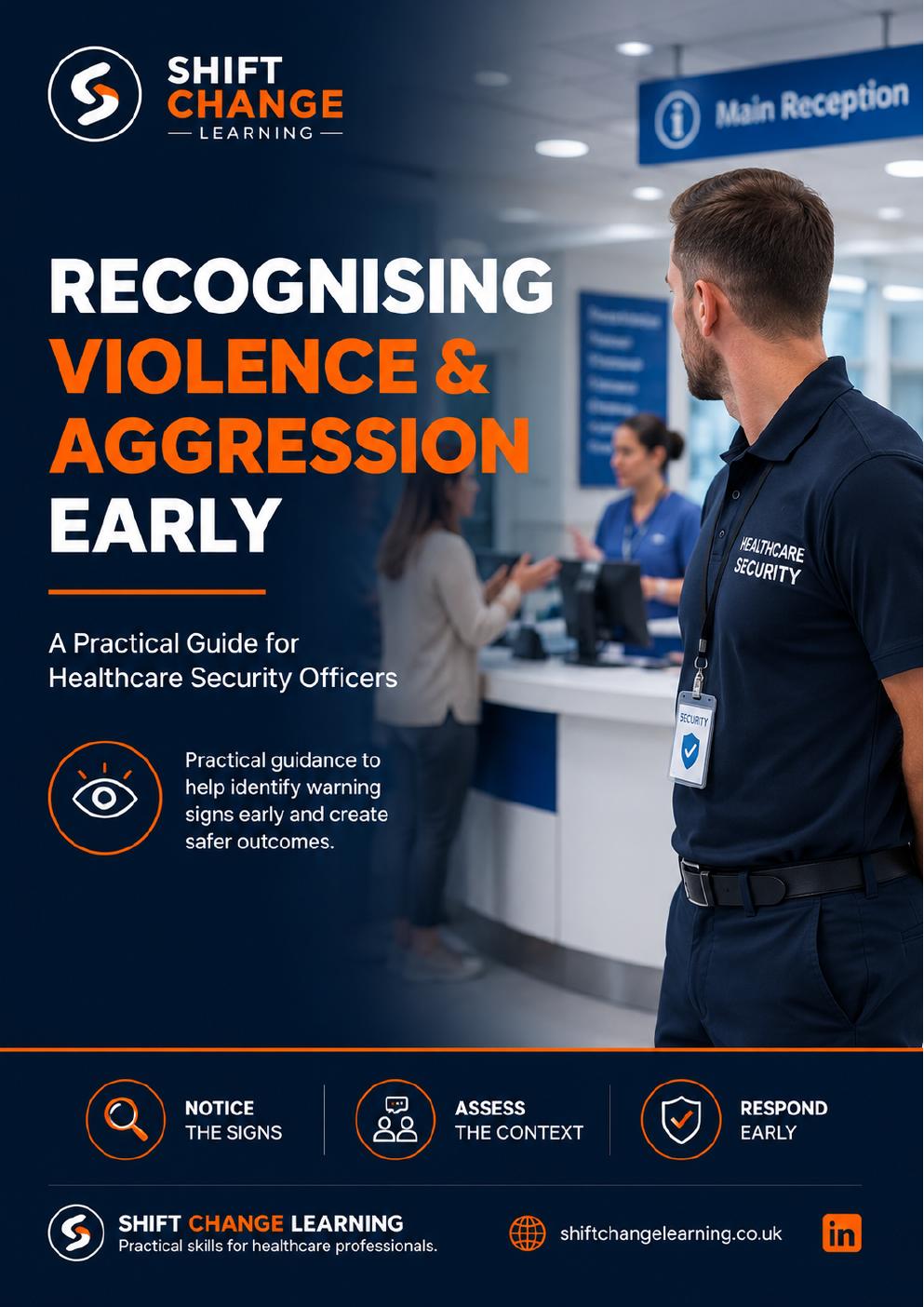
A practical framework for observing changes from baseline rather than relying on one behaviour in isolation.
 SHIFT CHANGELearning
 Free Guide
A practical guide for healthcare security officers who need to notice meaningful changes, understand the developing risk picture, and act before options narrow.
Why it matters
Pressure in healthcare settings can build through delay, uncertainty, pain, fear, grief, or a breakdown in communication. Recognising meaningful change gives officers more time to observe, communicate, create space, and involve the right people.
Early recognition is not prediction. This page previews the guide's approach while keeping its detailed warning signs, practical scenario, and quick-reference framework inside the downloadable PDF.
Inside The Guide
A quick preview of the themes covered, without giving the full guide away.
A practical framework for observing changes from baseline rather than relying on one behaviour in isolation.
Prompts for considering verbal, behavioural, and environmental factors without diagnosing or assuming intent.
Guidance around space, communication, support, positioning, and proportionate escalation when concern is rising.
Practical reminders for welfare, handover, reporting, CCTV references, debrief, and team support after an incident.
Use It For
These guides are designed to support real briefings, refreshers, coaching, and self-study.
Responsible Use
This guide is educational. It does not replace local training, clinical direction, organisational policy, or professional judgement.
Related Articles
Useful context to pair with this guide before or after download.

Small security failures can quietly become normal in hospitals. Learn why consistent standards, reporting, and early action protect people and services.
Read article
Why healthcare security teams are managing more violence, risk, welfare concerns, communication pressure, and organisational responsibility than ever.
Read article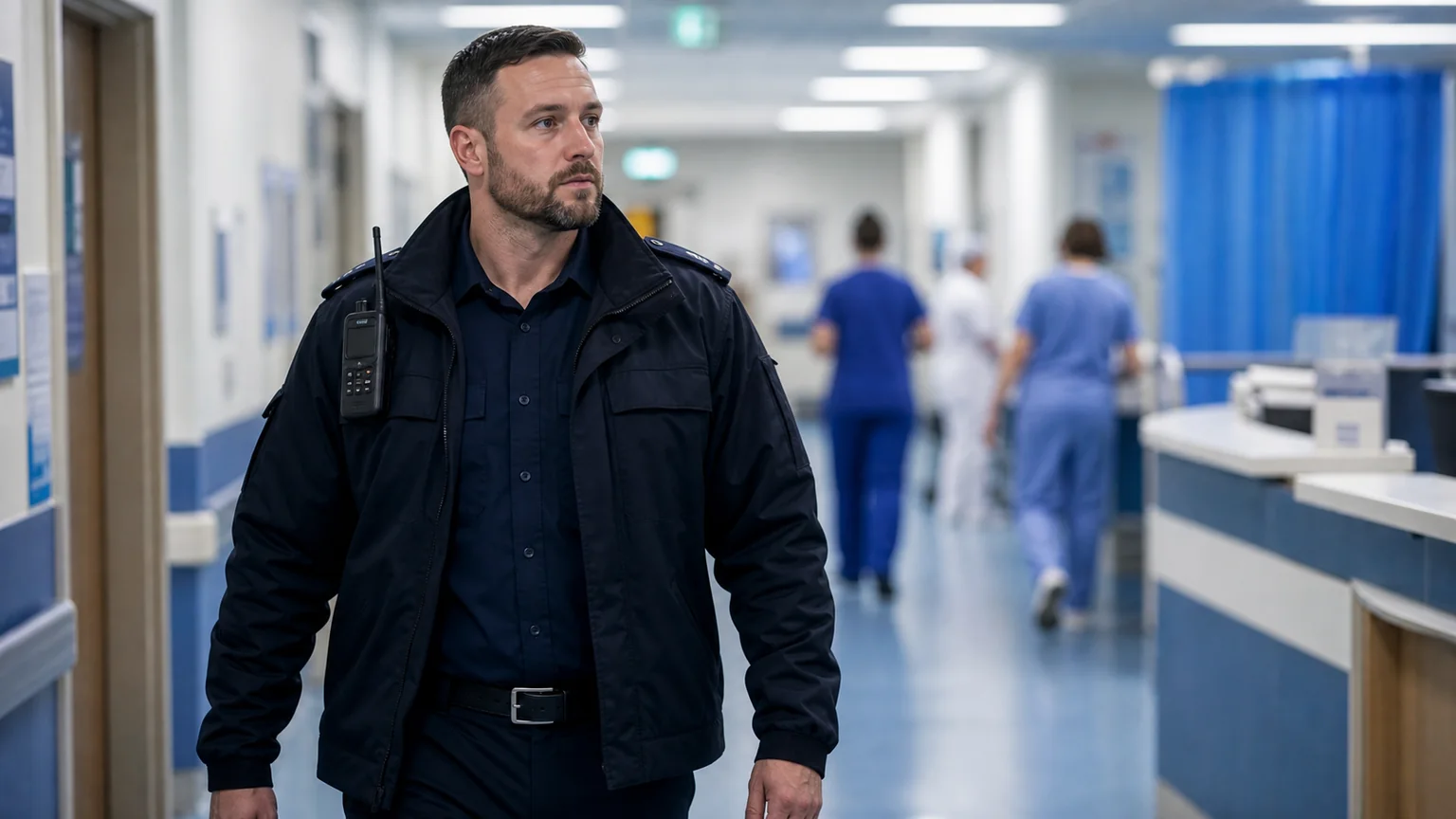
Discover what healthcare security officers really do, from patrols and CCTV to conflict management, emergency response, communication, and incident reporting.
Read articleFAQ
Yes. The guide is currently free to download through Gumroad.
It is designed for healthcare security officers, supervisors, response teams, and colleagues who want to recognise developing risk earlier.
No single sign proves that violence will occur. The guide focuses on meaningful change, context, the wider environment, and proportionate professional judgement.
Yes. It can support briefings, onboarding, scenario discussions, refresher training, and post-incident learning.
Free Resources
Use it for briefings, scenario discussions, onboarding, and practical conversations about recognising and responding to developing risk.