Spot what is changing
A practical approach to recognising hazards, behaviour changes, environmental factors, and people who may be affected.
 SHIFT CHANGELearning
 Free Guide
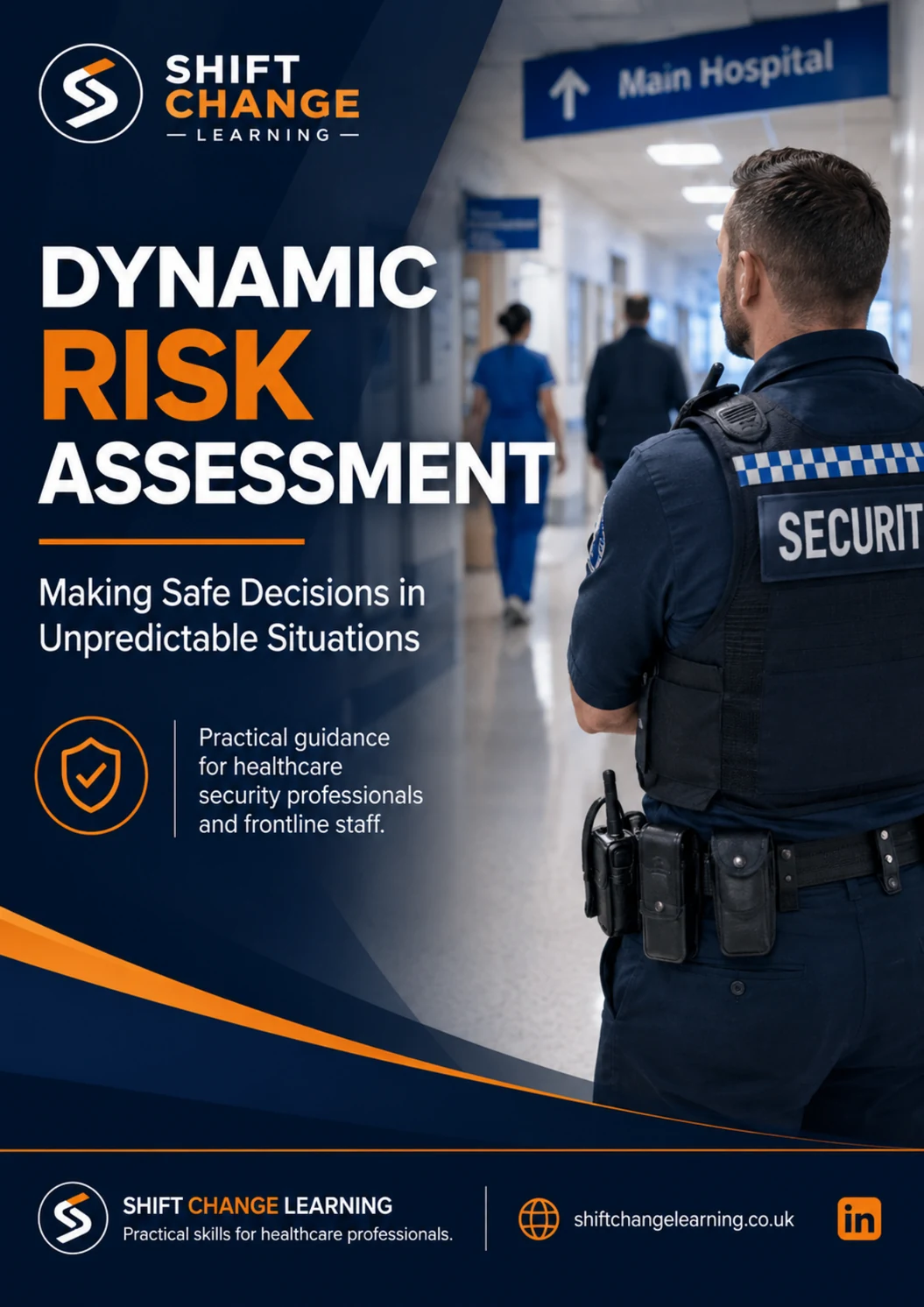
A practical guide for healthcare security officers who need to assess changing situations, make proportionate decisions, and communicate risk clearly during live operational work.
Why it matters
Dynamic risk assessment is about making sensible, proportionate decisions while circumstances are still developing. In healthcare security, that might involve conflict, vulnerability, clinical pressure, restricted areas, welfare concerns, or urgent requests for support.
This page previews the guide themes while keeping the working detail, prompts, and structure inside the downloadable PDF.
Inside The Guide
A quick preview of the themes covered, without giving the full guide away.
A practical approach to recognising hazards, behaviour changes, environmental factors, and people who may be affected.
Prompts for thinking about distance, support, communication, containment, escalation, and withdrawal when needed.
How officers can communicate developing risk clearly to colleagues, supervisors, and other responders.
A reminder that good decision-making should be understandable after the incident, not just in the moment.
Use It For
These guides are designed to support real briefings, refreshers, coaching, and self-study.
Responsible Use
This guide is a practical learning resource. It should support, not replace, local risk procedures, organisational policies, mandatory training, and professional judgement.
Related Articles
Useful context to pair with this guide before or after download.
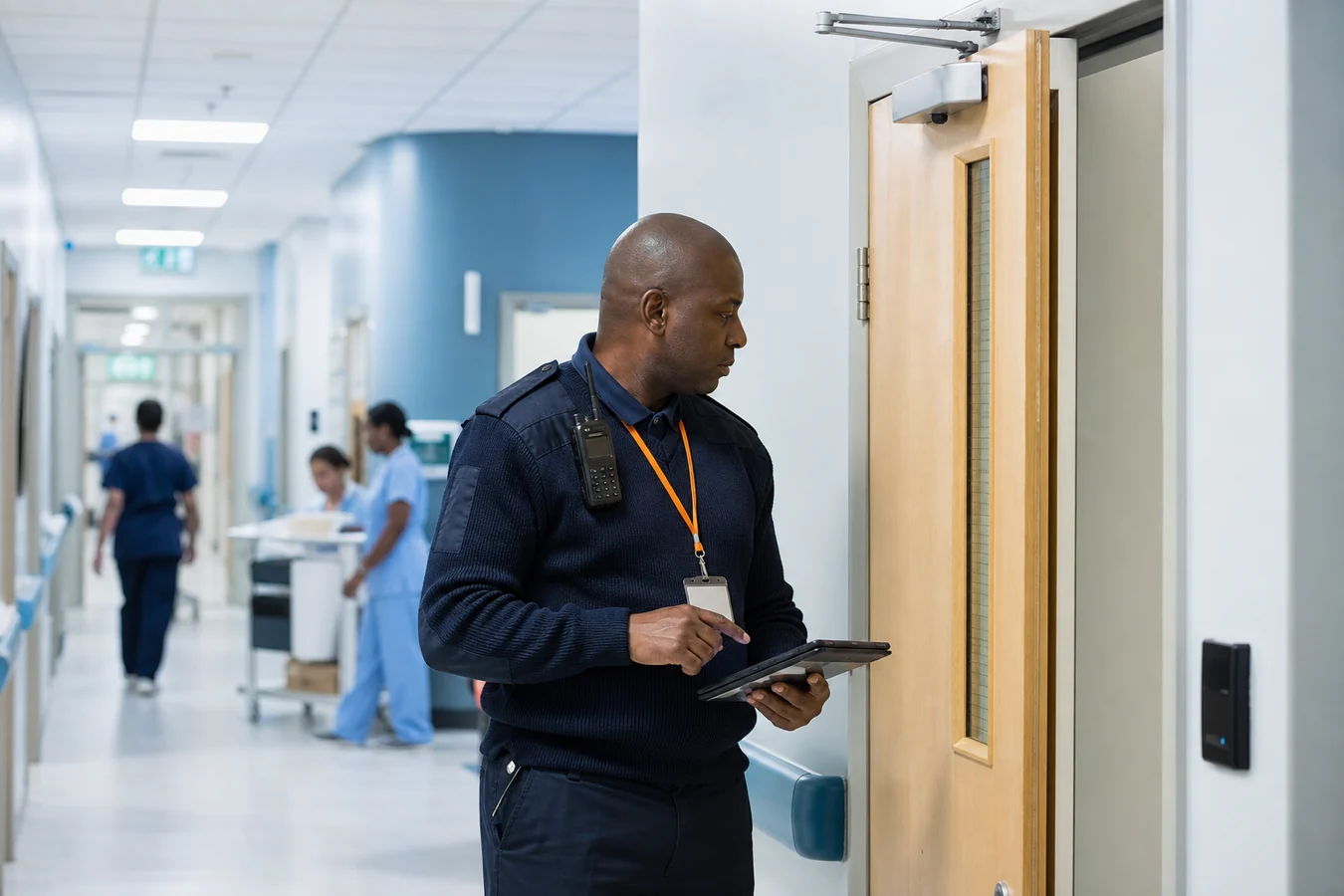
Small security failures can quietly become normal in hospitals. Learn why consistent standards, reporting, and early action protect people and services.
Read article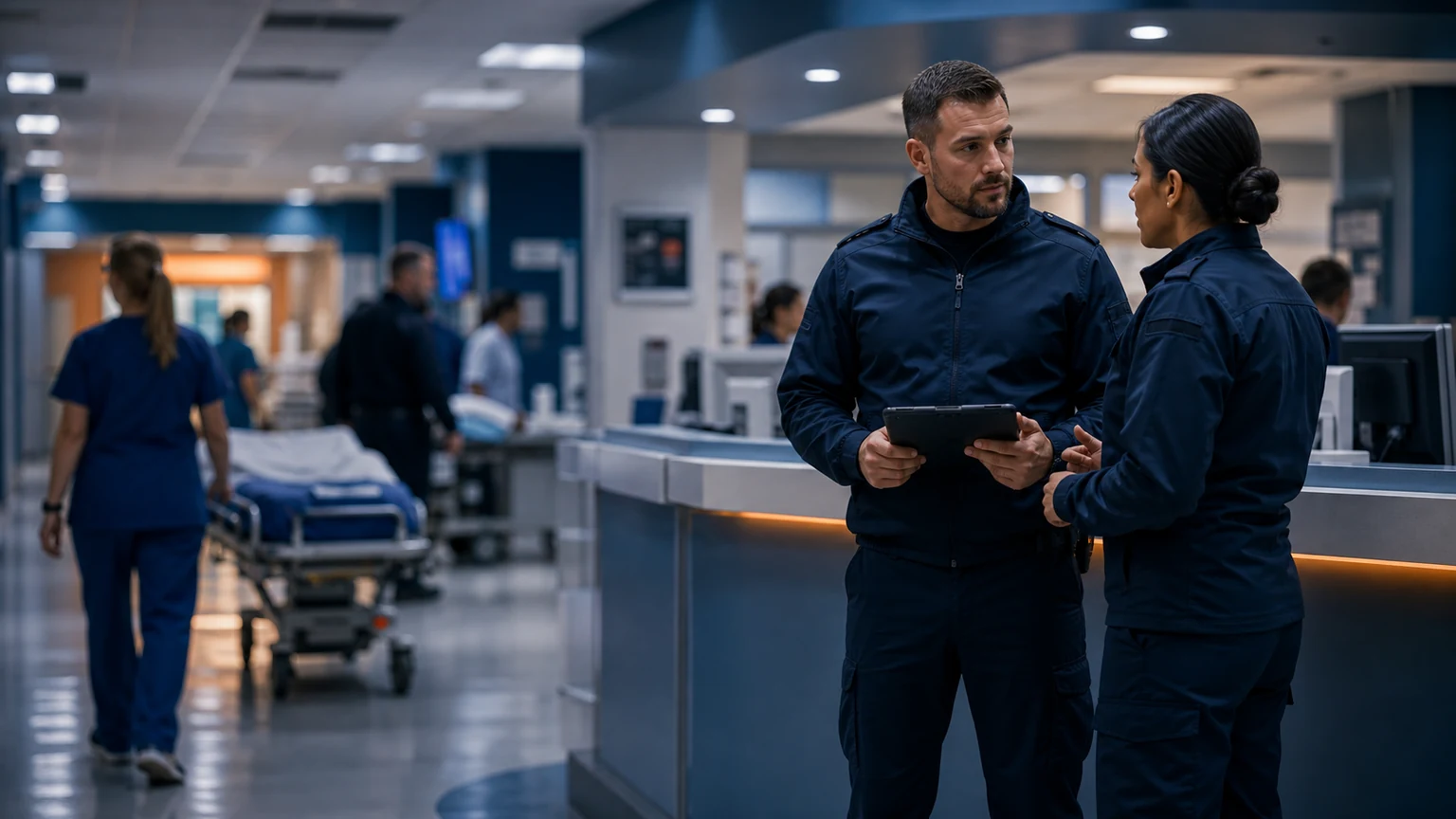
Why healthcare security teams are managing more violence, risk, welfare concerns, communication pressure, and organisational responsibility than ever.
Read article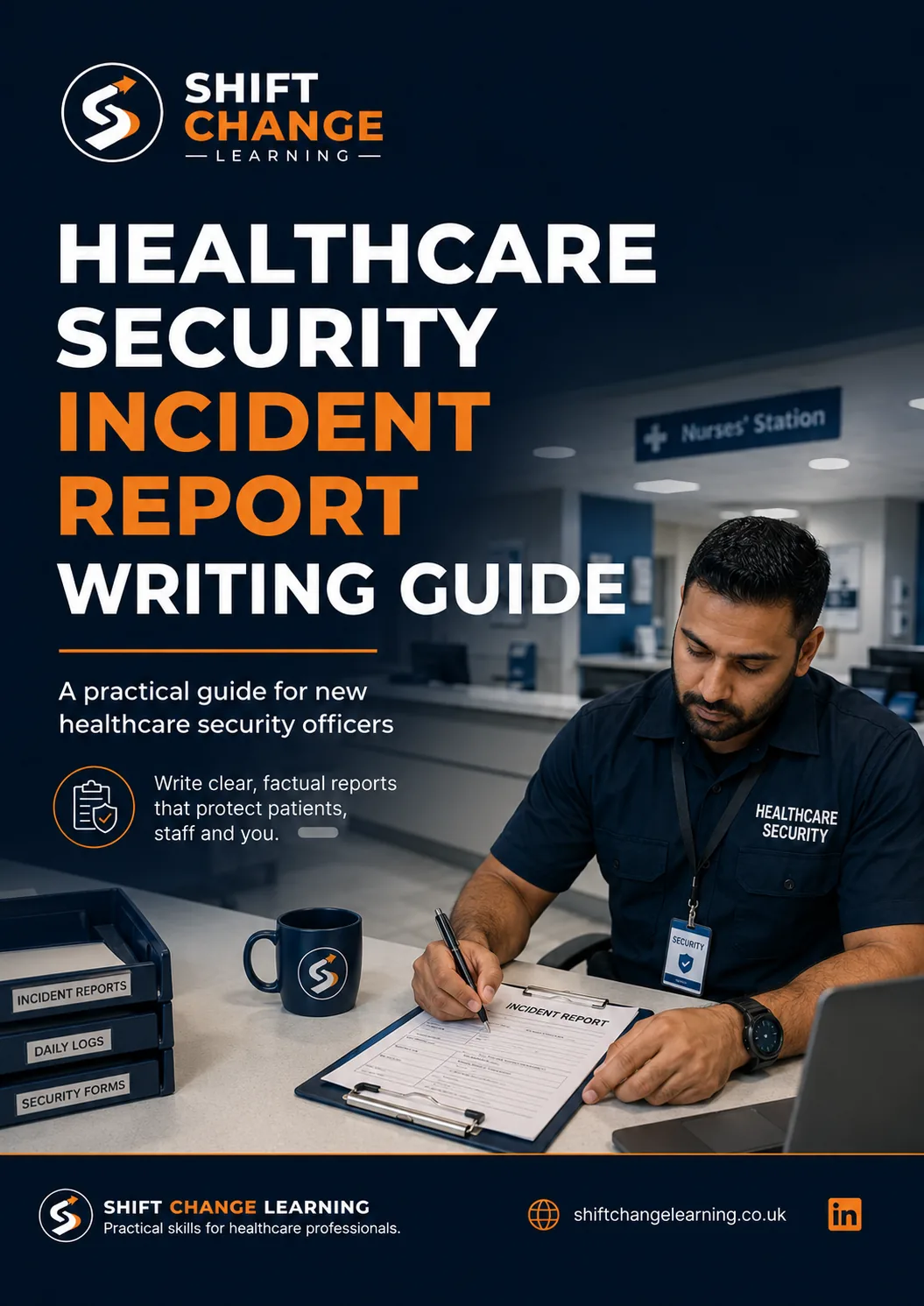
Martyn's Law will push healthcare sites to think beyond written plans. For hospitals, practical training is what makes preparedness usable.
Read articleFAQ
Yes. The guide is currently free to download through Gumroad.
It means assessing changing risks during live situations and choosing proportionate control measures as circumstances develop.
It is for healthcare security officers, supervisors, response teams, and anyone supporting practical risk decisions during incidents.
Yes. It is suitable for briefings, onboarding, scenario discussions, refresher training, and supervisor coaching.
Free Resources
Use it for briefings, scenario discussions, supervisor coaching, and safer decision-making during live healthcare security work.