Healthcare security is often misunderstood.
Ask someone what a security officer does and you will usually hear the same answers: patrols, CCTV, dealing with troublemakers, and checking doors.
Those tasks can be part of the role, but healthcare security is much broader than that.
In a hospital environment, security officers work in one of the most unpredictable settings in the country. No two shifts are the same. Officers are regularly expected to balance safety, professionalism, compassion, communication, and conflict management, sometimes within the same incident.
So what does the role actually involve?
Protecting people first
Healthcare security is not primarily about protecting buildings.
The priority is protecting people.
That includes patients, visitors, contractors, clinical staff, support staff, and security colleagues. A healthcare security officer may be called to respond to aggression towards staff, assist during medical emergencies, support vulnerable patients, manage disruptive visitors, prevent unauthorised access, or provide reassurance during stressful situations.
Many incidents involve communication and de-escalation rather than physical intervention. The best officers often resolve problems long before they become formal security incidents.
Managing conflict and violence
Violence and aggression remain a real challenge in healthcare settings.
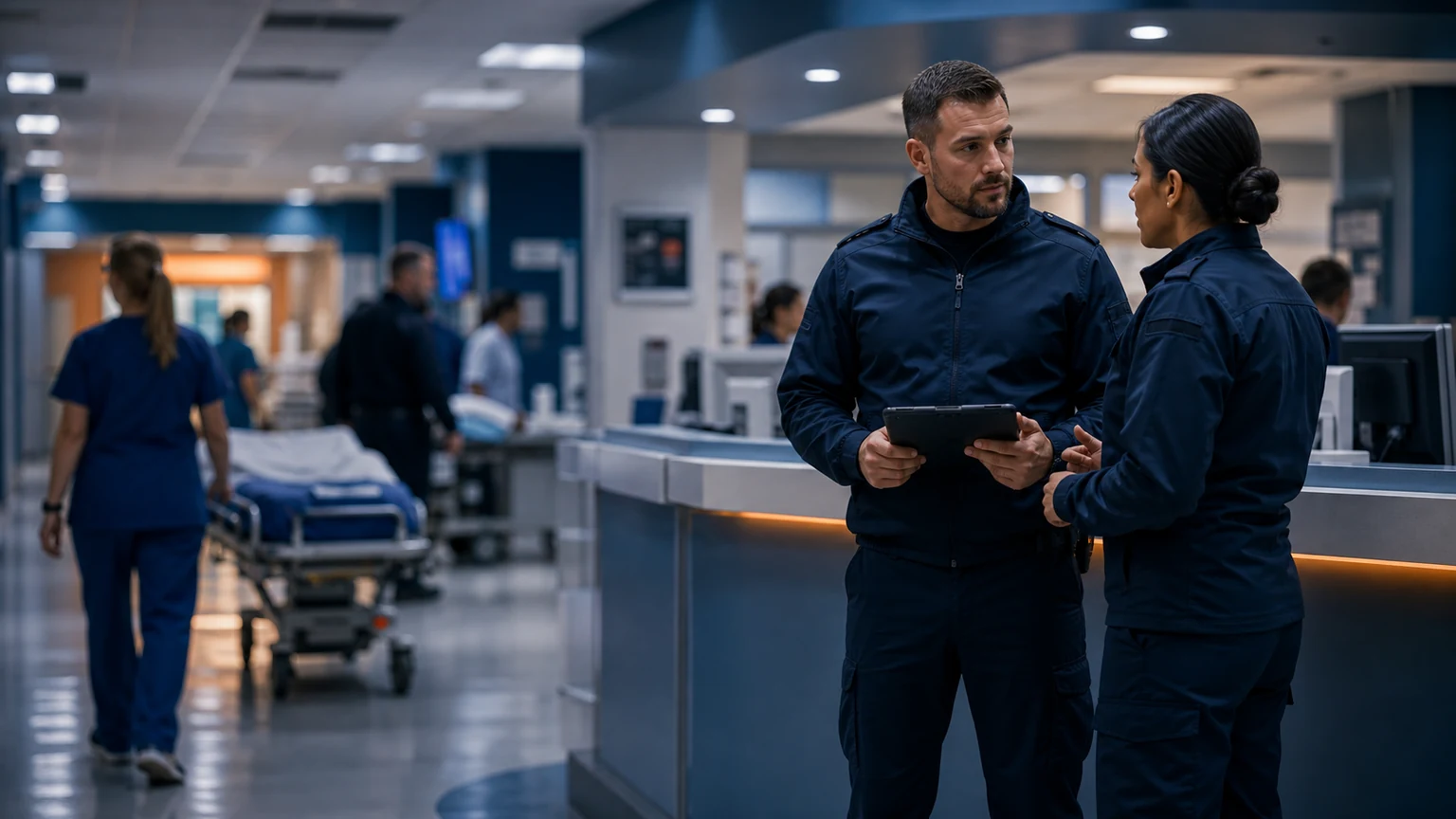
Security officers are often among the first responders when situations begin to escalate. That might involve supporting frontline staff, separating people involved in a confrontation, managing aggressive behaviour, gathering information, or coordinating with police when required.
The ability to remain calm under pressure is one of the most valuable skills an officer can develop. A measured response can often prevent a difficult situation from becoming significantly more serious.
Early intervention depends on noticing more than obvious aggression. The free Recognising Violence & Aggression Early guide looks at change from baseline, contextual warning signs, and proportionate action before options narrow.
This is why violence reduction depends on more than one person or one department. It needs good reporting, communication, training, supervision, and organisational learning.
Patrolling the hospital environment
Routine patrols are still an important part of the role.
But hospital patrols are not simply about checking doors.
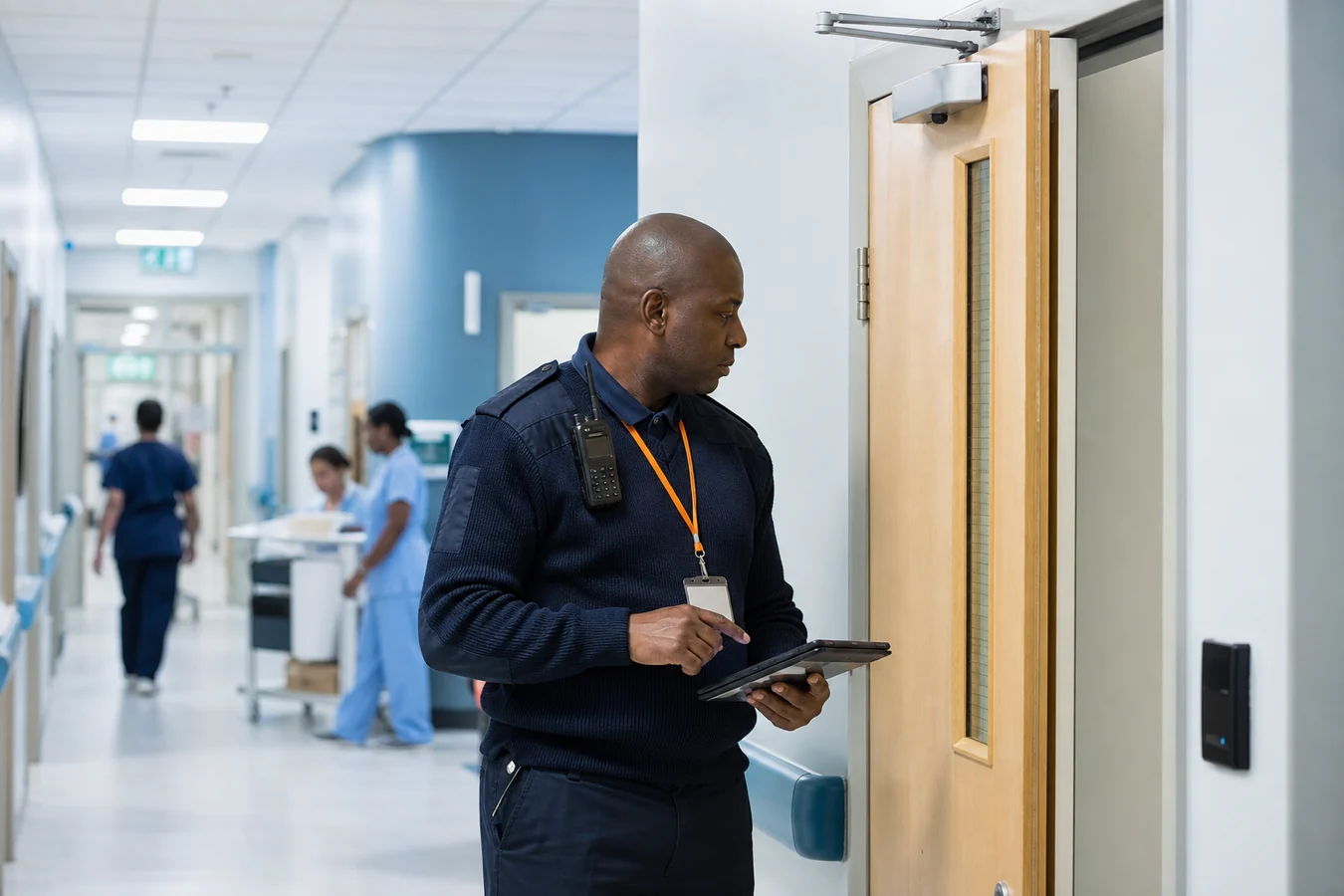
Officers may be identifying security vulnerabilities, monitoring high-risk areas, checking lone working staff, investigating suspicious activity, or making sure emergency routes remain clear. A single patrol can take an officer from a busy Emergency Department to a quiet plant room, maternity area, staff accommodation, or multi-storey car park.
The environment changes constantly, so officers need to stay alert, adaptable, and professionally curious throughout their shift.
For a structured look at preparation, observation, checks, and handover, see the free Professional Security Patrols guide. The security patrols topic also brings together wider reading on the day-to-day standards behind that work.
That professional curiosity often starts with apparently minor issues. The Small Things Become Big Things explores how defects, repeated exceptions, and low-level concerns can quietly become normal when nobody takes ownership.
Monitoring CCTV and security systems
Modern healthcare security relies heavily on technology.
Many officers spend part of their shift monitoring CCTV, alarms, access control systems, and incident information. That can include reviewing incidents, tracking missing persons, monitoring vulnerable patients, supporting investigations, and providing evidence for police or internal enquiries.
Good CCTV operators do far more than watch screens. They assess behaviour, identify risk, support operational decisions, and communicate useful updates to officers on the ground.
For more on this, see our article on AI CCTV in healthcare security.
Supporting emergency responses
Healthcare security teams often play a key role during emergencies.
Depending on the site and local procedures, officers may assist with fire evacuations, missing patient searches, major incidents, lockdown procedures, Emergency Department crowd management, or severe weather responses.
During these incidents, security officers can become an important link between operational teams, clinical staff, estates, police, ambulance, fire services, and hospital command structures.
Their site knowledge is often invaluable when fast decisions need to be made.
Protecting the hospital site
Hospitals operate around the clock and receive thousands of visitors, patients, contractors, and staff every day.
That creates unique security challenges. Officers may deal with theft, criminal damage, trespassing, anti-social behaviour, unauthorised access, or vehicle-related incidents.
Those issues may sound similar to other security sectors, but the healthcare context changes the risk. The presence of vulnerable patients, clinical services, medication, restricted areas, and critical infrastructure means the consequences can be much greater.
That is why healthcare security officers need strong dynamic risk assessment skills. The right decision depends on the people, place, behaviour, environment, and information available at the time.
Report writing and investigation
One of the most overlooked aspects of healthcare security is paperwork.
Every incident needs accurate documentation. Officers may be responsible for writing incident reports, recording witness accounts, preserving evidence, producing statements, and supporting internal investigations.
Strong report writing skills are often just as important as physical security skills. A poorly written report can undermine an otherwise well-managed incident.
Our free Healthcare Security Incident Report Writing Guide is designed to help officers write clearer, more useful reports in healthcare settings.
Communication is the real core skill
If there is one skill that underpins almost every aspect of healthcare security, it is communication.
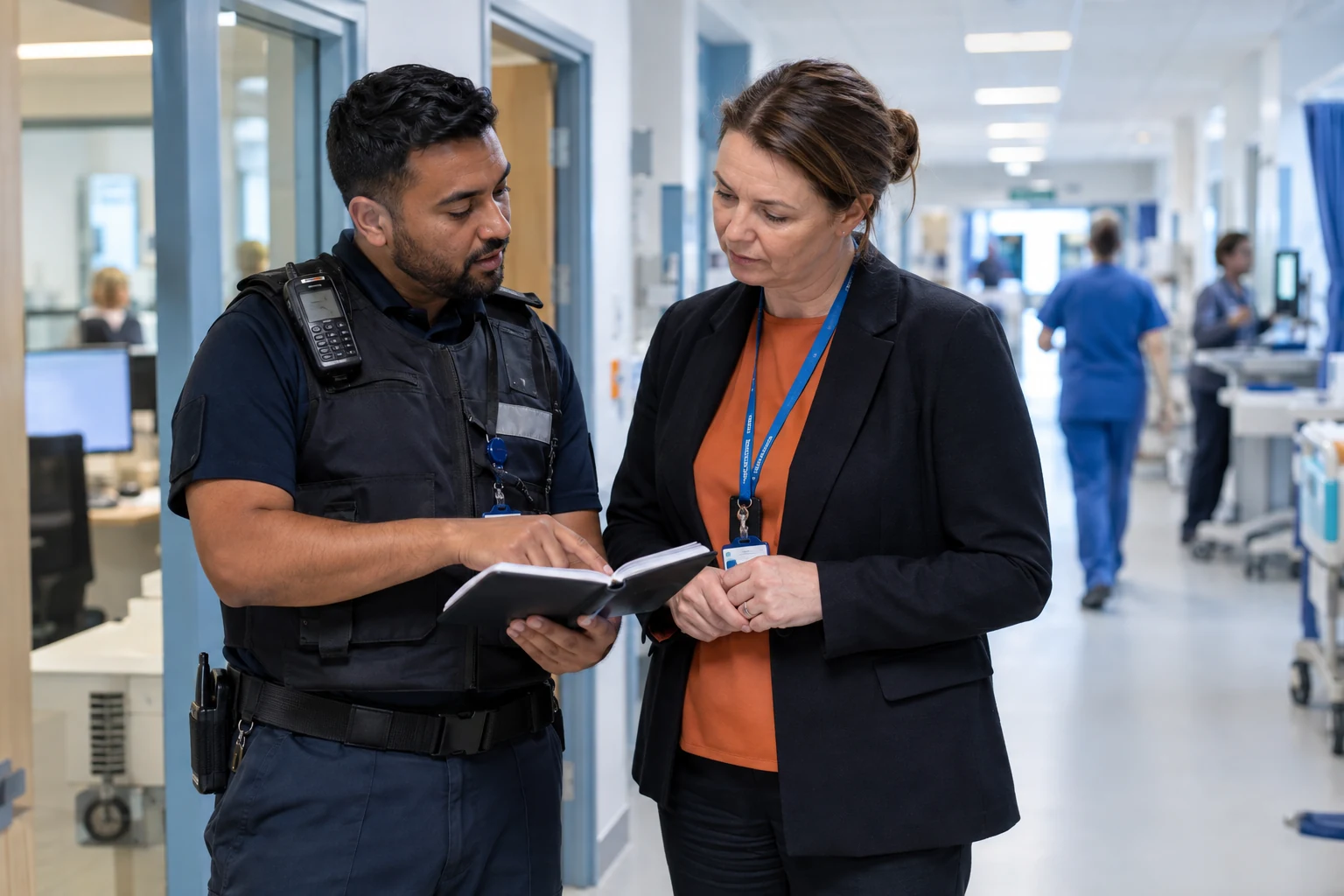
Officers interact with people from every background imaginable. One moment they may be speaking with a distressed relative. The next, they may be assisting clinical staff, briefing police officers, updating the control room, or helping a confused patient find their way around the hospital.
The ability to communicate clearly, professionally, and calmly often determines the outcome of an incident.
That includes face-to-face communication, but also radio procedure, handovers, written reports, and supervisor updates.
The reality of healthcare security
Healthcare security is not simply about enforcement.
It is a role built around protecting people, supporting healthcare services, and helping maintain a safe environment for everyone on site.
The most effective officers combine observation, communication, professionalism, sound judgement, and practical compassion.
Much of their work happens behind the scenes, but healthcare security teams play a critical role in helping hospitals function safely every day.