Useful phrases
Short, professional phrases that can be remembered under pressure and adapted to the person in front of you.
 SHIFT CHANGELearning
 Topic Hub
De-escalation is not a script for making every situation easy. It is a practical communication approach that helps officers slow things down, reduce friction, offer choices, and keep people safer when emotions are high.
What This Covers
Each topic page is built around the jobs, decisions, and conversations healthcare security teams actually face on shift.
Short, professional phrases that can be remembered under pressure and adapted to the person in front of you.
How calm delivery, slower speech, and clear boundaries can change the direction of an interaction.
Ways to offer realistic options without sounding weak, vague, or confrontational.
De-escalation includes recognising when distance, backup, clinical support, or police attendance is needed.
Common Scenarios
These examples make the topic more concrete and help readers connect the resources to real healthcare security work.
Recommended Guides
Selected resources that fit this topic most closely, rather than every product in the catalogue.
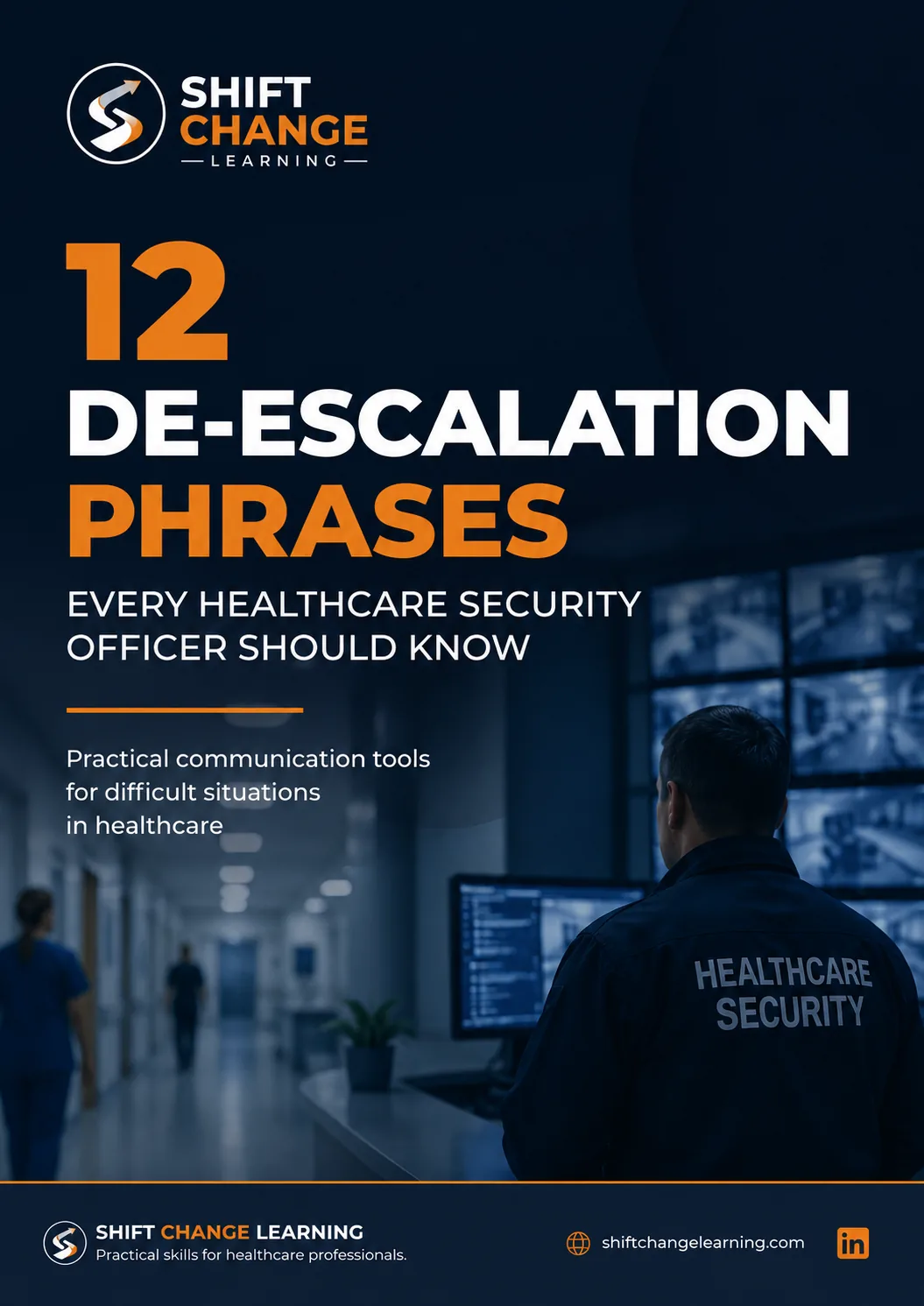
Free digital guide
Practical communication prompts every healthcare security officer should know for difficult situations.
Related Reading
Curated posts first, followed by wider articles that share this topic's tags.

Why healthcare security teams should understand Martha's Rule, support appropriate signposting, and help prevent communication failures becoming conflict.
Read article Short, prepared phrases can help healthcare security officers communicate clearly in difficult moments.
Read article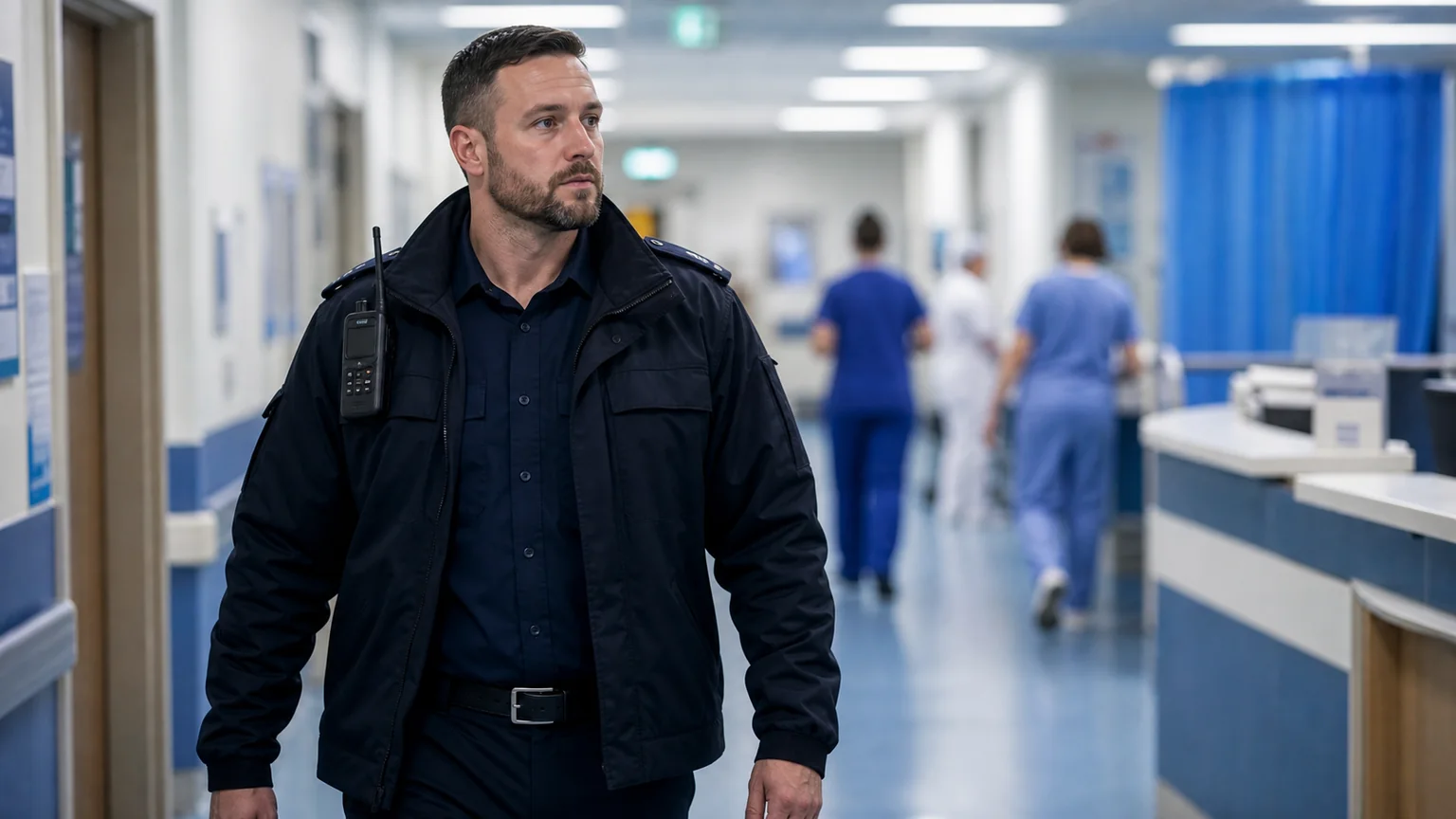
Discover what healthcare security officers really do, from patrols and CCTV to conflict management, emergency response, communication, and incident reporting.
Read articleFAQ
No. They are tools, not guarantees. Their value is in giving officers a calmer starting point while they continue to assess risk, distance, support, and safety.
Prepared phrases reduce the chance of blurting out something defensive or unclear when pressure is high. They also support consistency across a team.
If the risk is increasing, the person is not responding, weapons are suspected, staff are unsafe, or the officer is isolated, the priority becomes distance, backup, containment, or escalation.
Next Steps