Threat and harm
Identify what might happen, who could be harmed, and how quickly the risk could change.
 SHIFT CHANGELearning
 Topic Hub
Dynamic risk assessment is the habit of constantly asking what has changed, what could happen next, and what control measures are realistic right now. In healthcare security, that judgement often has to happen in corridors, waiting rooms, wards, and car parks while the situation is still moving.
What This Covers
Each topic page is built around the jobs, decisions, and conversations healthcare security teams actually face on shift.
Identify what might happen, who could be harmed, and how quickly the risk could change.
Consider patients, staff, visitors, exits, clinical equipment, restricted areas, and bystanders.
Choose realistic options such as distance, positioning, radio updates, clinical support, police, or withdrawal.
After the incident, explain what was known at the time and why a particular action was taken.
Common Scenarios
These examples make the topic more concrete and help readers connect the resources to real healthcare security work.
Recommended Guides
Selected resources that fit this topic most closely, rather than every product in the catalogue.
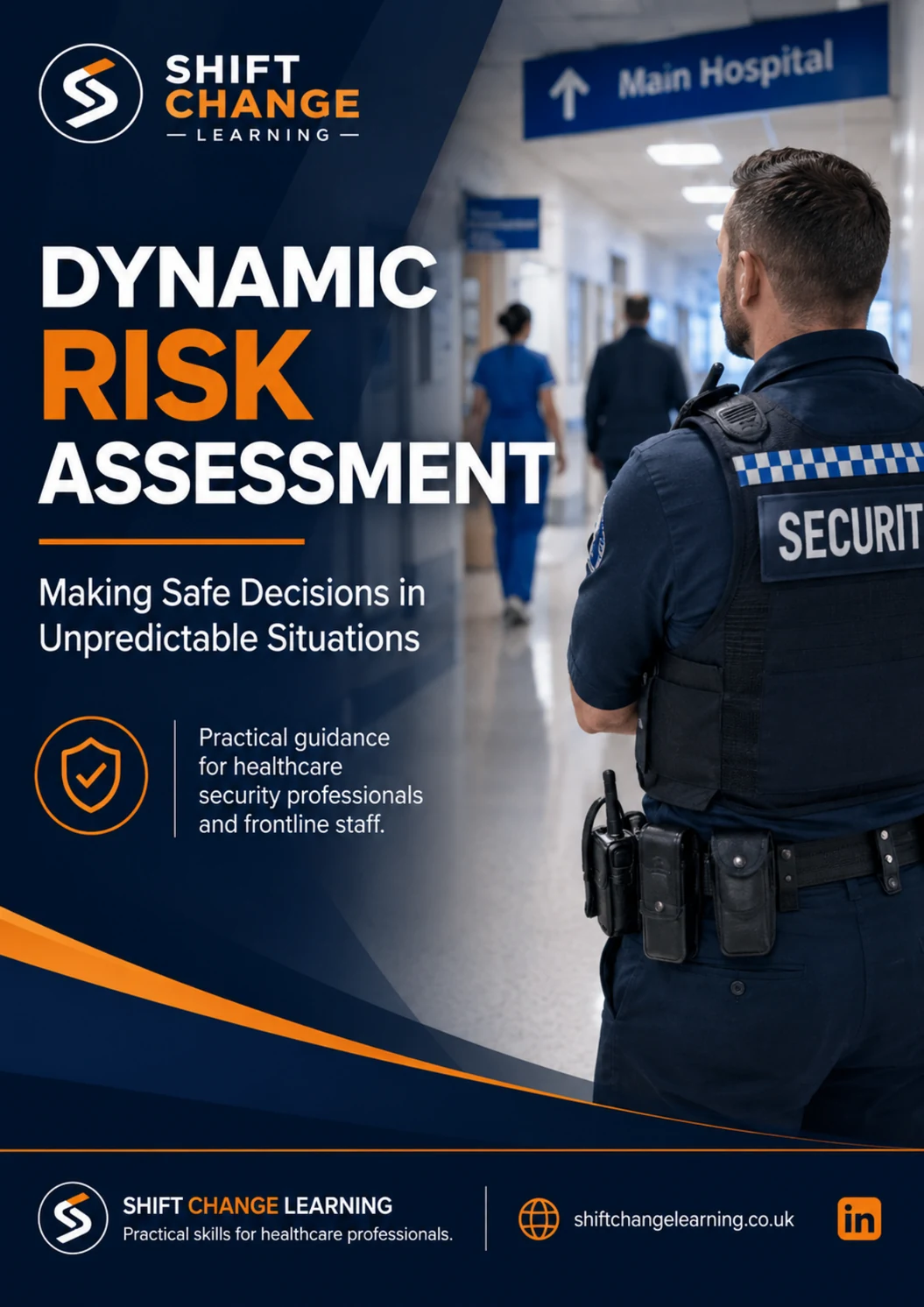
Free digital guide
A practical guide to dynamic risk assessment for healthcare security officers making decisions in changing situations.
Related Reading
Curated posts first, followed by wider articles that share this topic's tags.
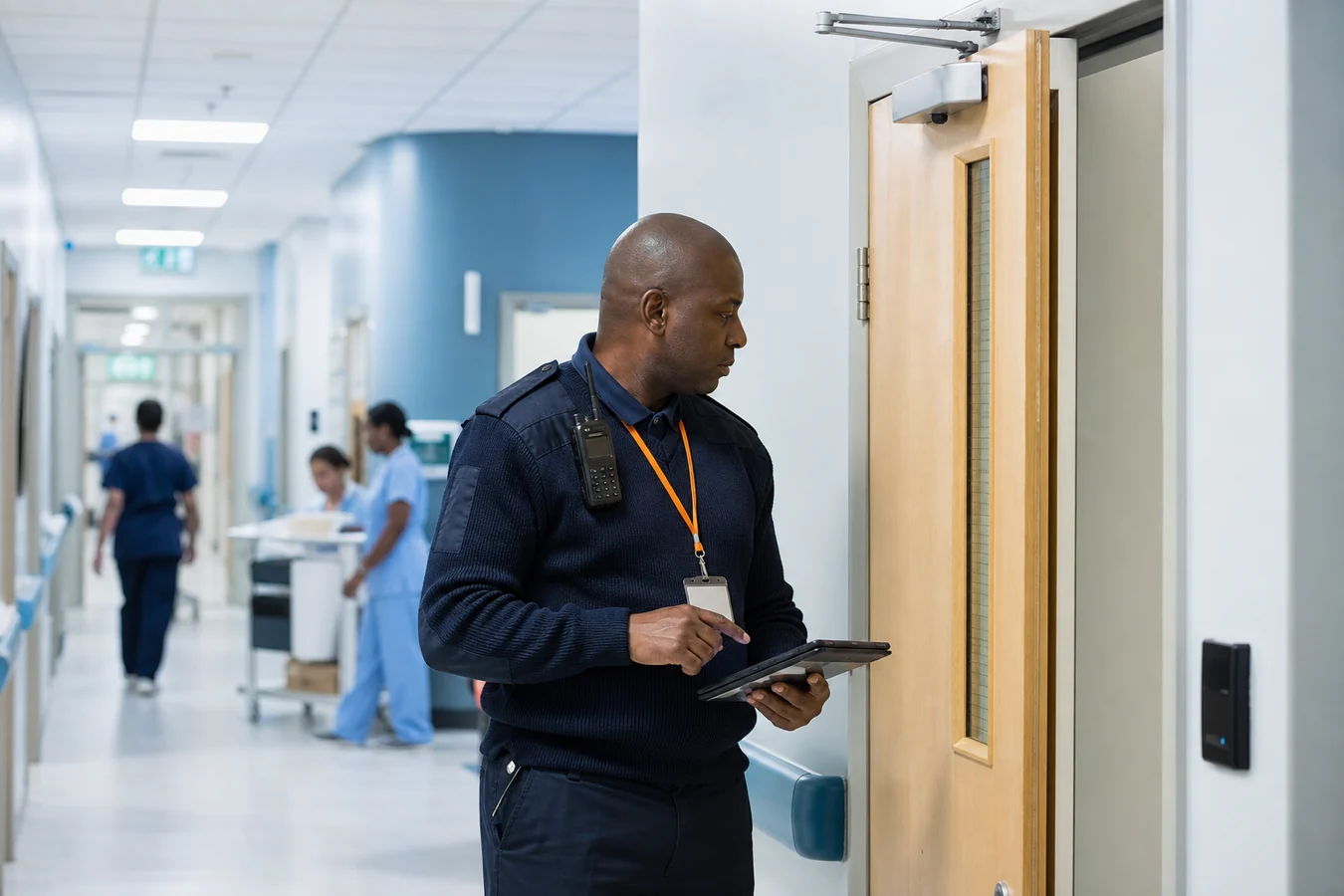
Small security failures can quietly become normal in hospitals. Learn why consistent standards, reporting, and early action protect people and services.
Read article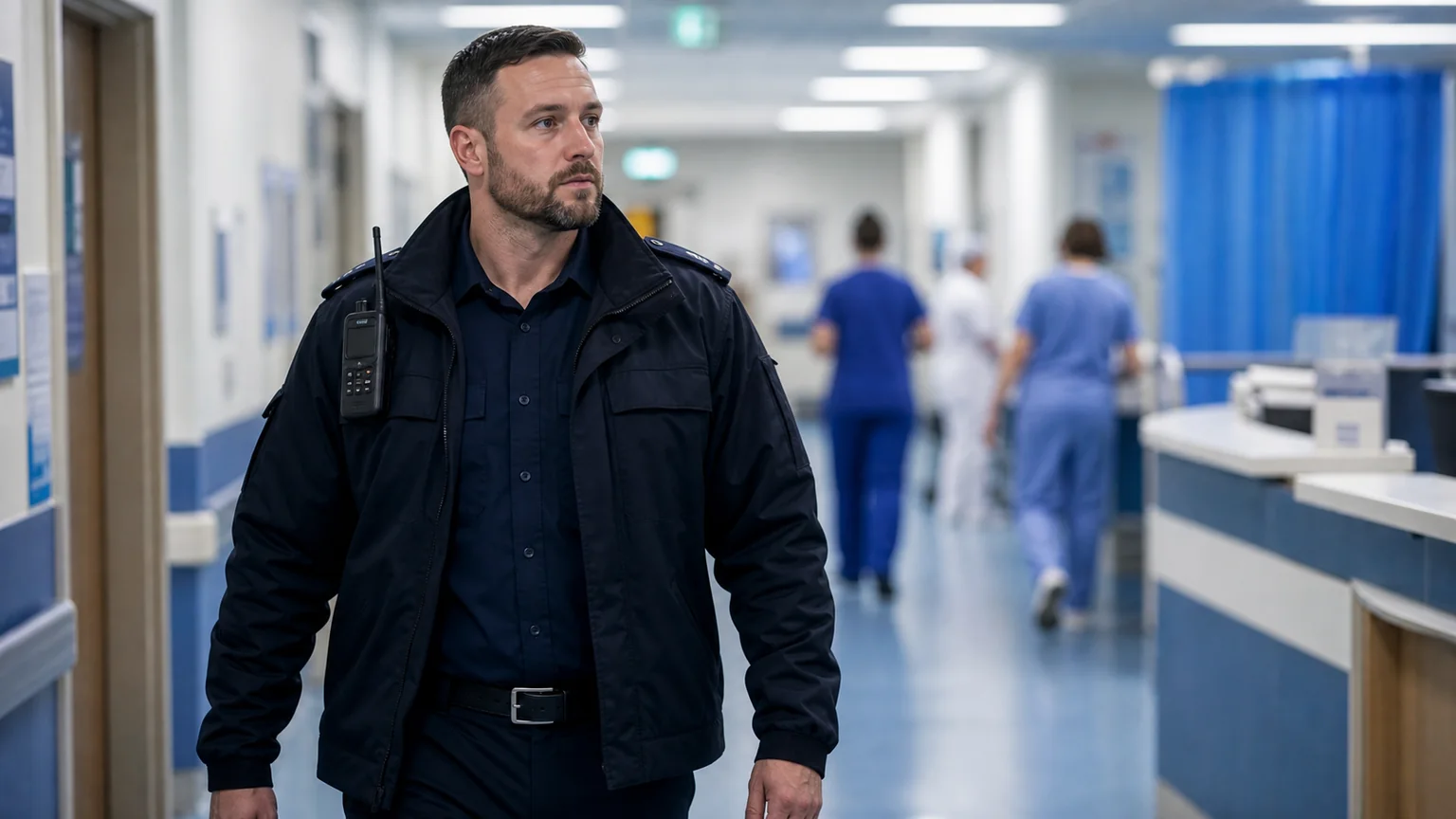
Discover what healthcare security officers really do, from patrols and CCTV to conflict management, emergency response, communication, and incident reporting.
Read article
Why healthcare security teams are managing more violence, risk, welfare concerns, communication pressure, and organisational responsibility than ever.
Read articleFAQ
It is the ongoing process of assessing changing risk during live work, choosing proportionate control measures, and reviewing decisions as new information appears.
No. It applies to routine calls as well as serious incidents because risk can change quickly in ordinary healthcare environments.
Reports should briefly explain the key risks identified, what information was available, what action was taken, and why that action was reasonable at the time.
Next Steps
Good reports show how risk changed and why decisions were made.
Explore De-escalationCommunication can be one of the most effective control measures when risk is still manageable.
Explore Security patrolsPurposeful observation helps officers notice changes before a routine concern becomes urgent.