Early recognition
Notice meaningful changes in behaviour, communication, and environment while there is still time to create safer options.
 SHIFT CHANGELearning
 Topic Hub
Violence reduction in healthcare is bigger than one officer, one policy, or one incident. It relies on early recognition, consistent communication, useful reporting, staff support, training, leadership, and joined-up action across the organisation.
What This Covers
Each topic page is built around the jobs, decisions, and conversations healthcare security teams actually face on shift.
Notice meaningful changes in behaviour, communication, and environment while there is still time to create safer options.
Build confidence in de-escalation, radio communication, risk assessment, and report writing.
Use reports, reviews, and staff feedback to improve practice rather than simply file incidents away.
Security, clinical teams, estates, management, police, and safeguarding often need to work from the same picture.
Common Scenarios
These examples make the topic more concrete and help readers connect the resources to real healthcare security work.
Recommended Guides
Selected resources that fit this topic most closely, rather than every product in the catalogue.
Free digital guide
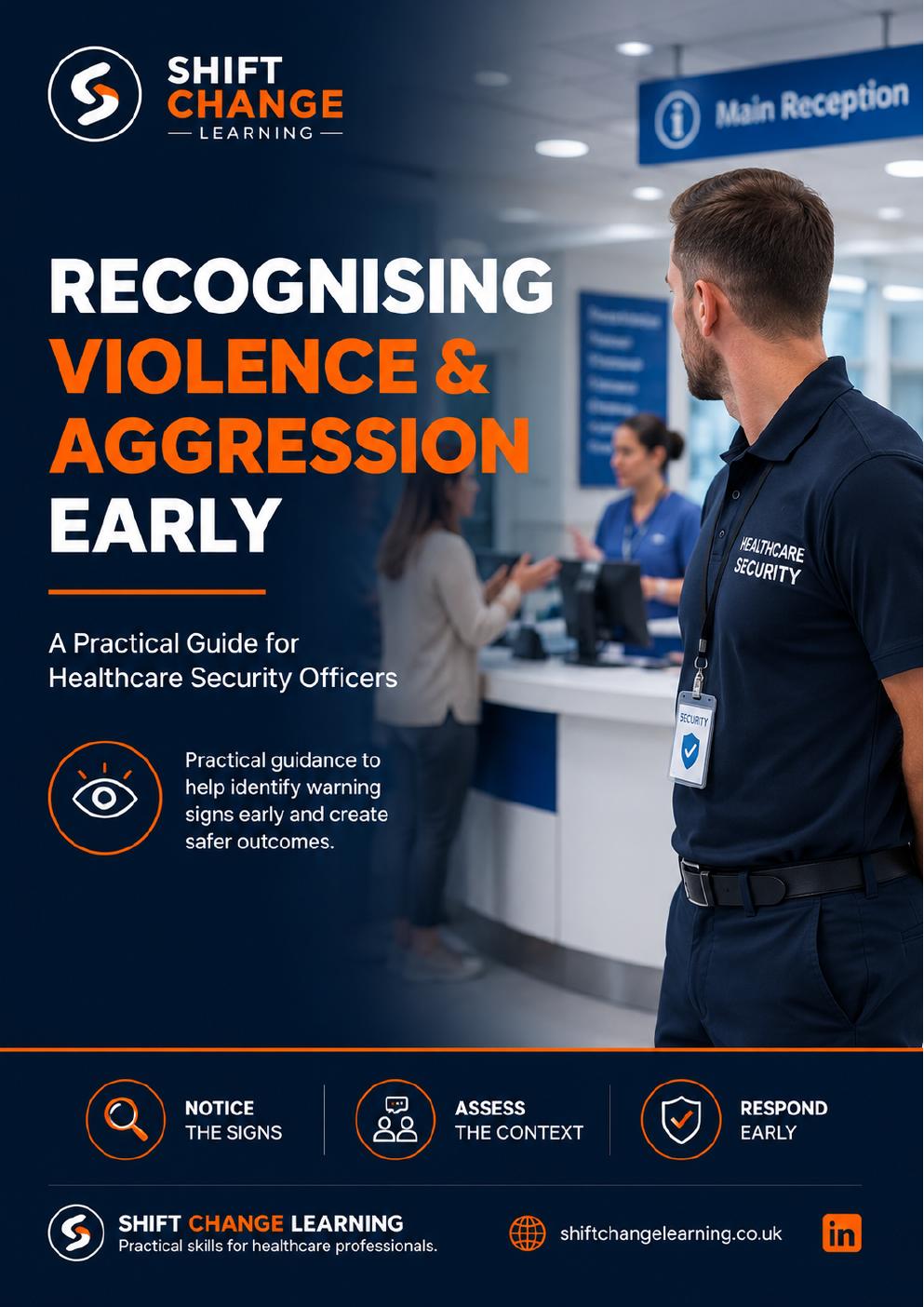
A practical guide to noticing meaningful changes in behaviour, context, and environment before violence or aggression escalates.
Free digital guide
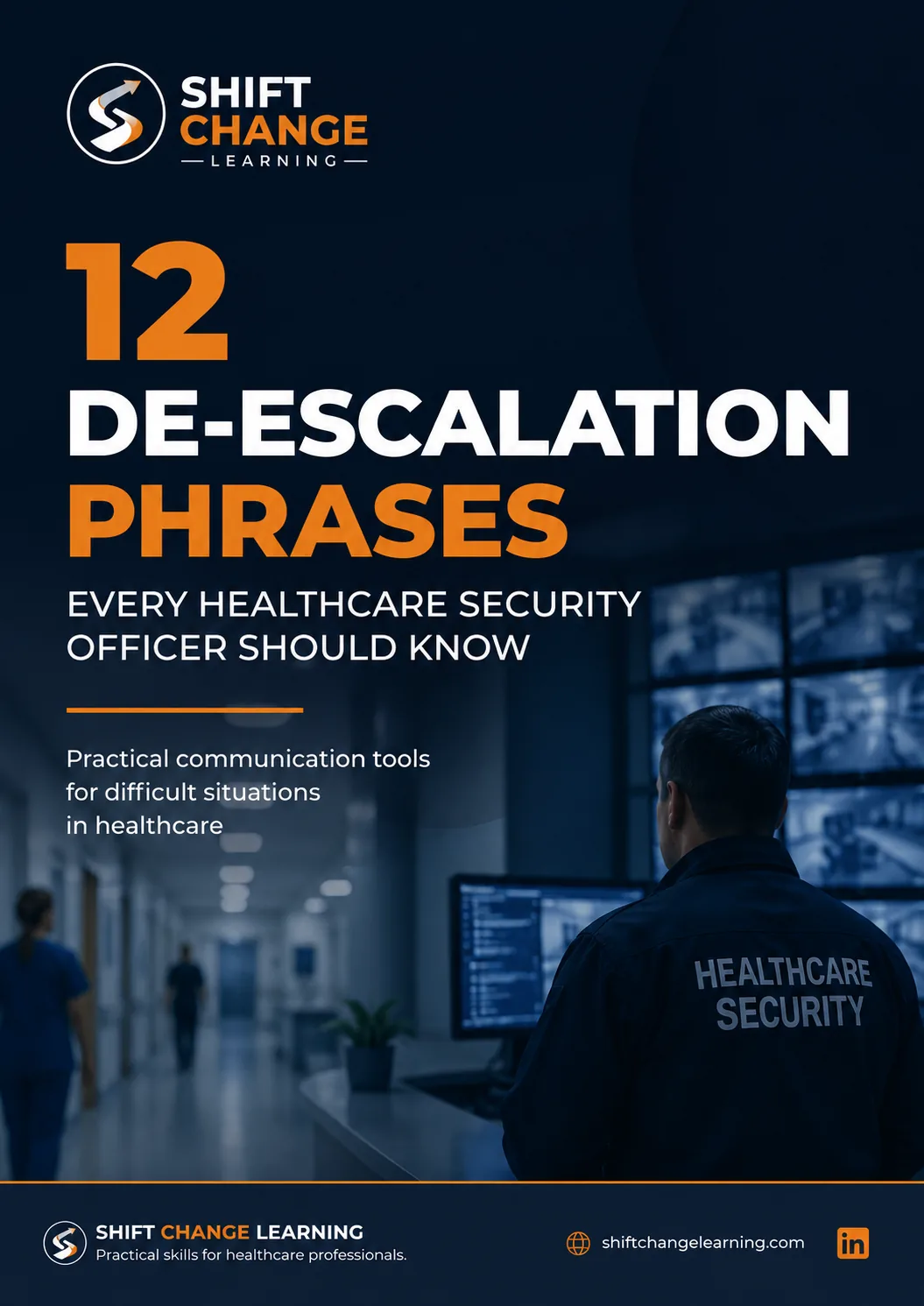
Practical communication prompts every healthcare security officer should know for difficult situations.
Free digital guide
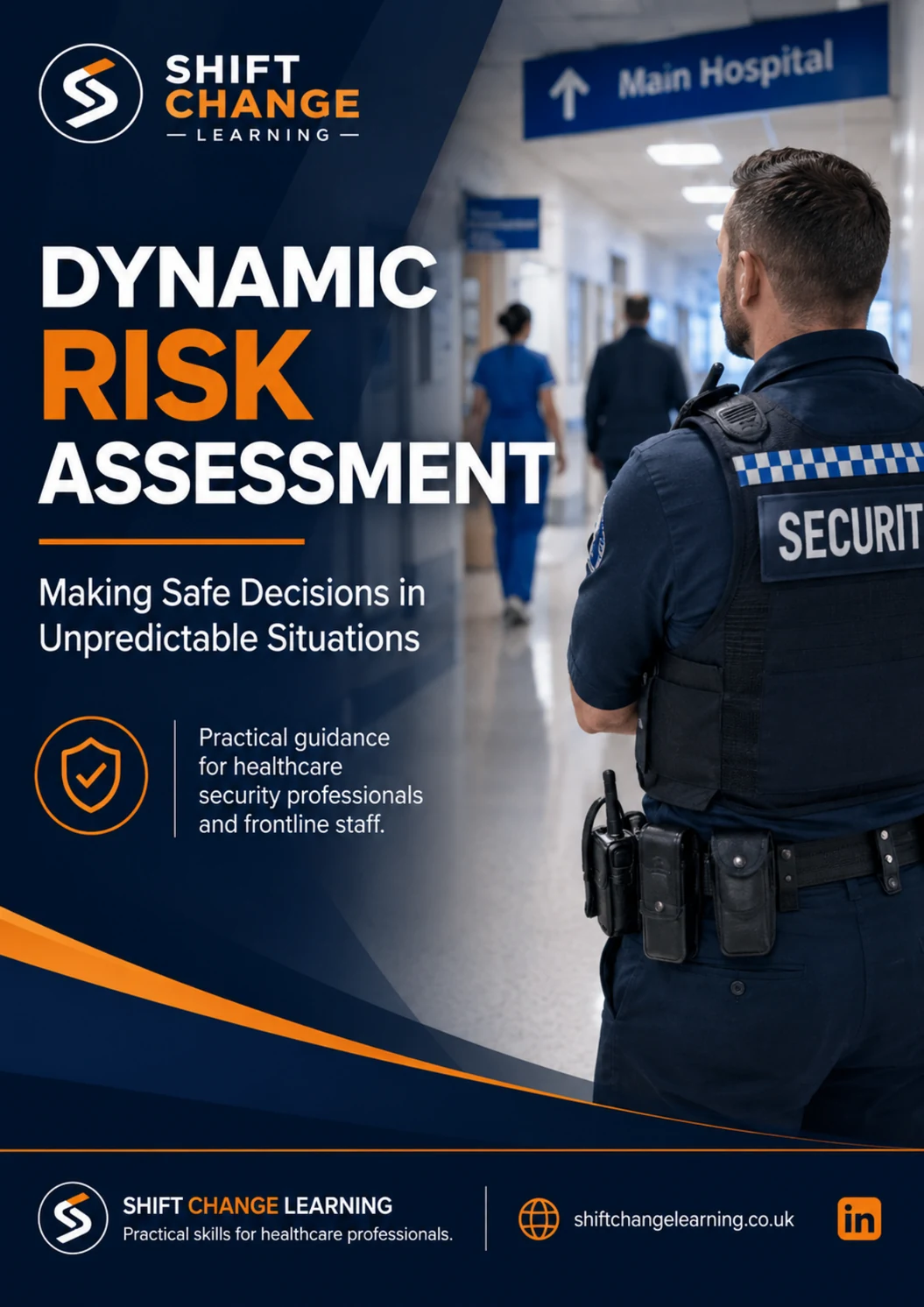
A practical guide to dynamic risk assessment for healthcare security officers making decisions in changing situations.
Free digital guide
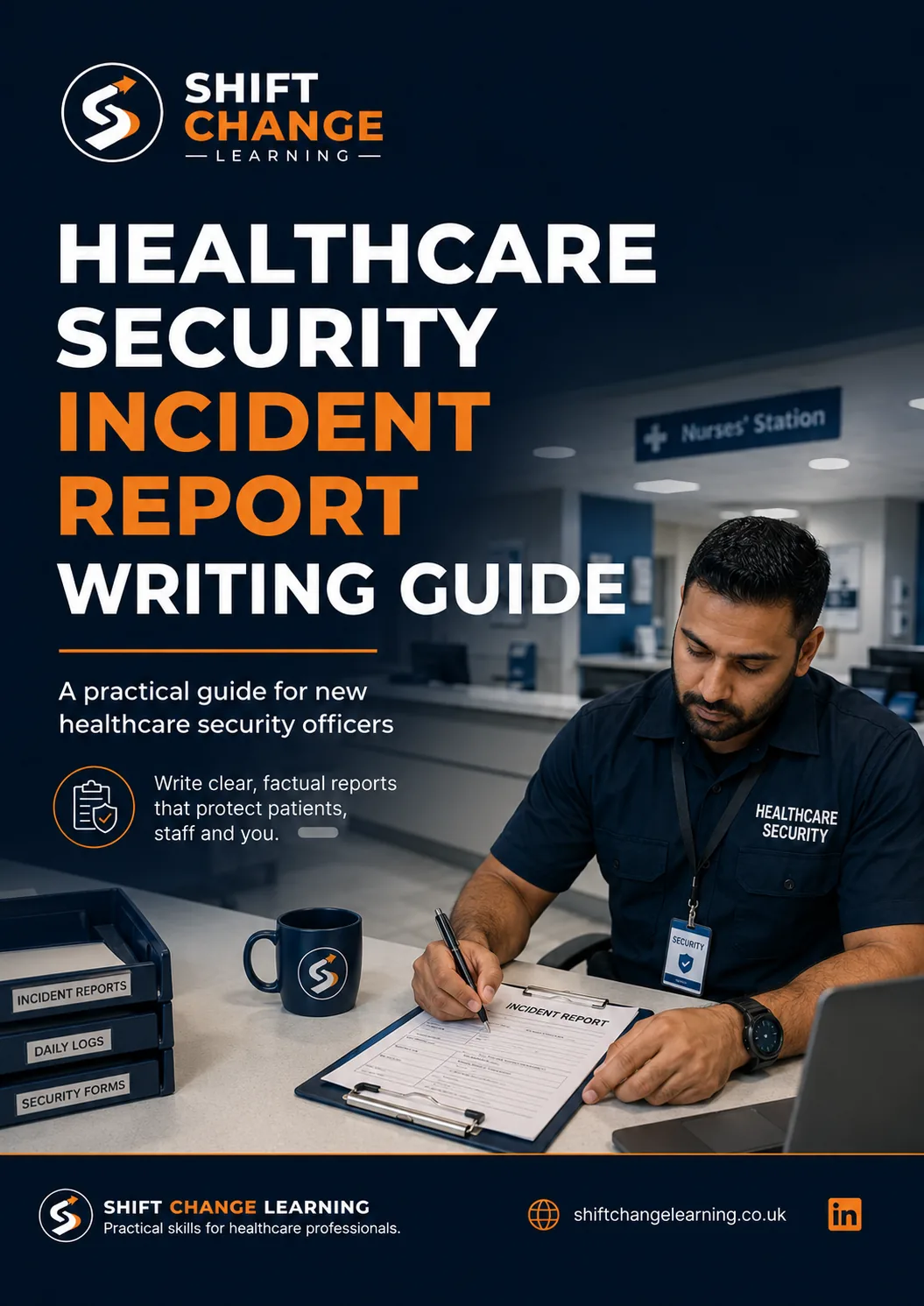
A practical guide for new healthcare security officers who need to write clear, factual incident reports.
Free digital guide
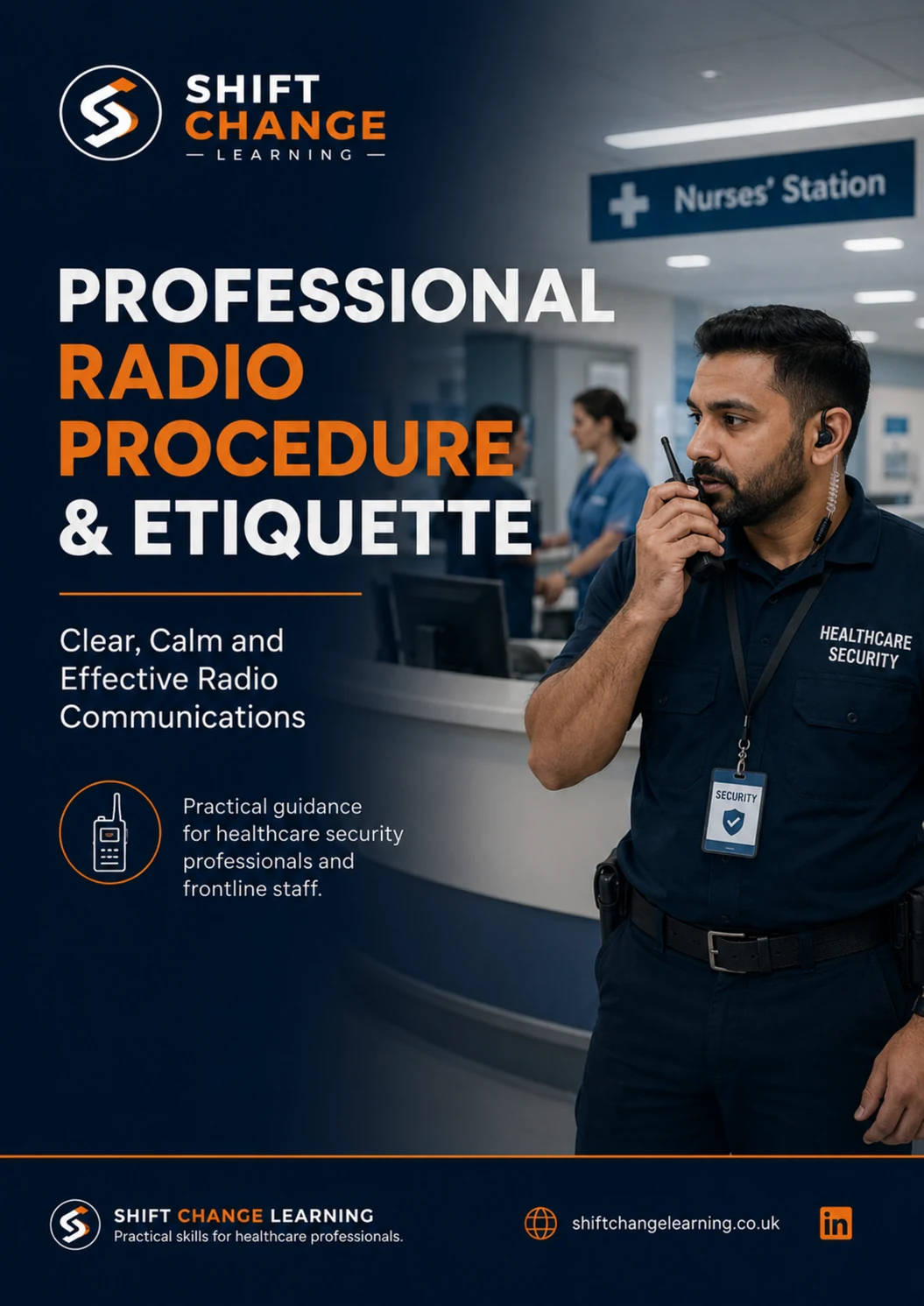
A practical guide to clear, professional radio communication for healthcare security officers and teams.
Related Reading
Curated posts first, followed by wider articles that share this topic's tags.
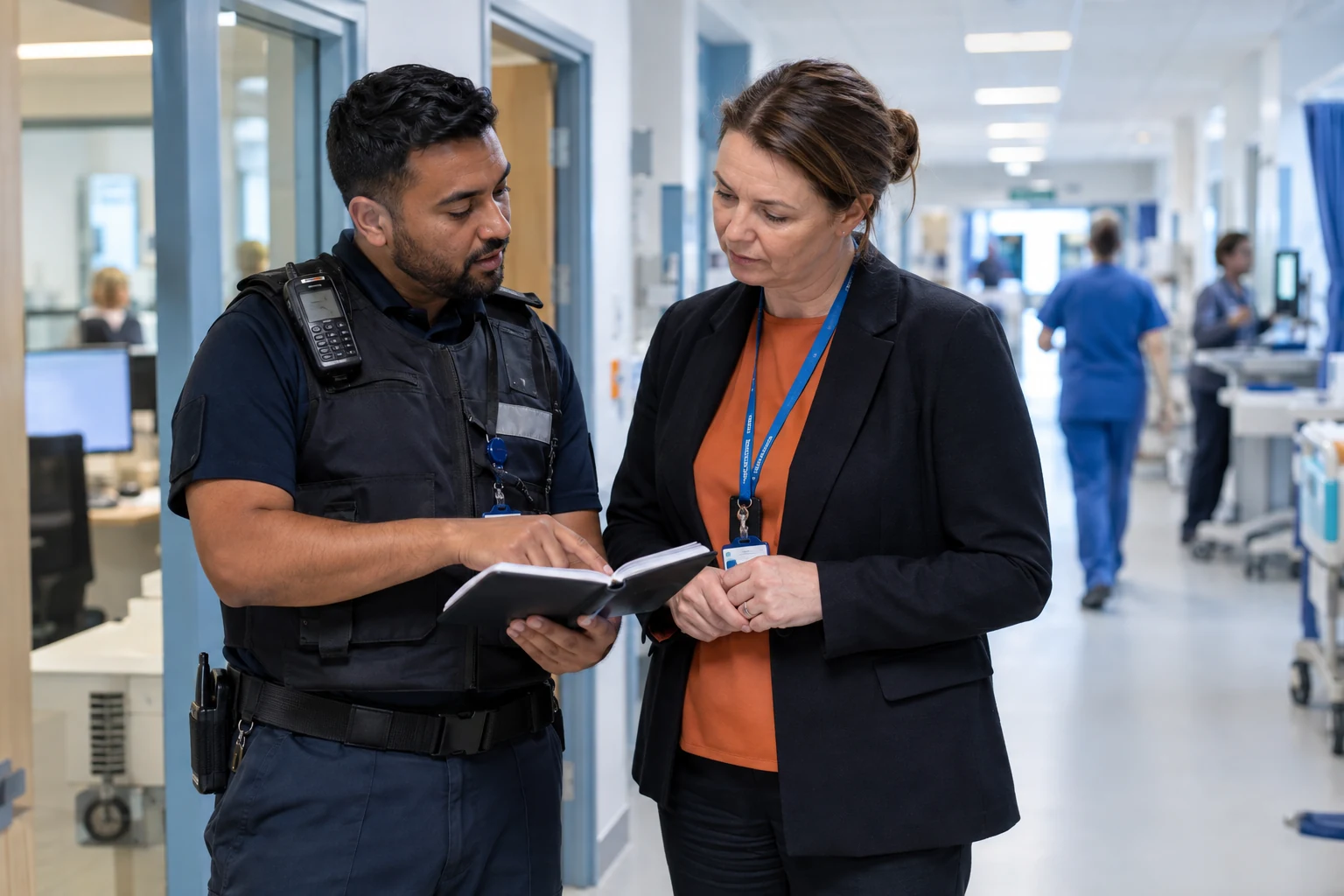
Why healthcare security officers should raise concerns professionally, recognise patterns, use the right reporting route, and never assume somebody else will act.
Read article
Small security failures can quietly become normal in hospitals. Learn why consistent standards, reporting, and early action protect people and services.
Read article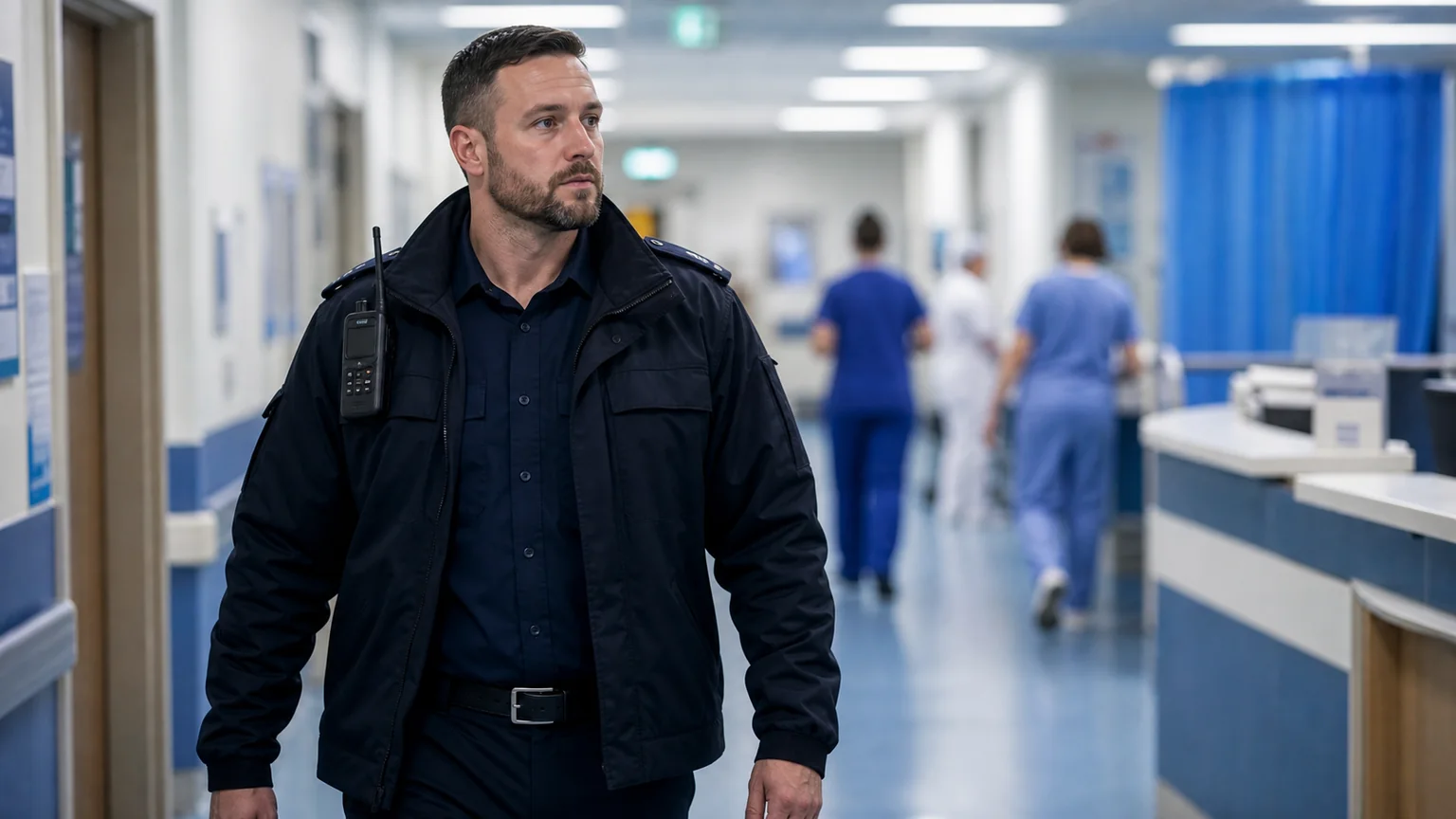
Discover what healthcare security officers really do, from patrols and CCTV to conflict management, emergency response, communication, and incident reporting.
Read articleFAQ
No. Security teams are central to the response, but sustainable violence reduction also involves leadership, clinical teams, reporting systems, environment, training, and staff support.
Training gives staff shared language, clearer expectations, better early intervention, and more consistent decisions before, during, and after incidents.
Reports turn individual incidents into evidence. They help identify patterns, support action, justify resources, and show whether interventions are working.
Next Steps