Message structure
Make calls easier to understand by using clear starts, locations, requests, updates, and closures.
 SHIFT CHANGELearning
 Topic Hub
Radio procedure is the difference between a team that sounds busy and a team that communicates clearly. Good radio discipline helps officers share the right information quickly without blocking the channel or exposing unnecessary detail.
What This Covers
Each topic page is built around the jobs, decisions, and conversations healthcare security teams actually face on shift.
Make calls easier to understand by using clear starts, locations, requests, updates, and closures.
Keep the air clear for urgent messages and avoid long, unclear, or repeated transmissions.
Share enough to coordinate safely while avoiding unnecessary patient, staff, or sensitive information.
Support logging, tasking, CCTV coordination, welfare checks, and escalation with better radio habits.
Common Scenarios
These examples make the topic more concrete and help readers connect the resources to real healthcare security work.
Recommended Guides
Selected resources that fit this topic most closely, rather than every product in the catalogue.
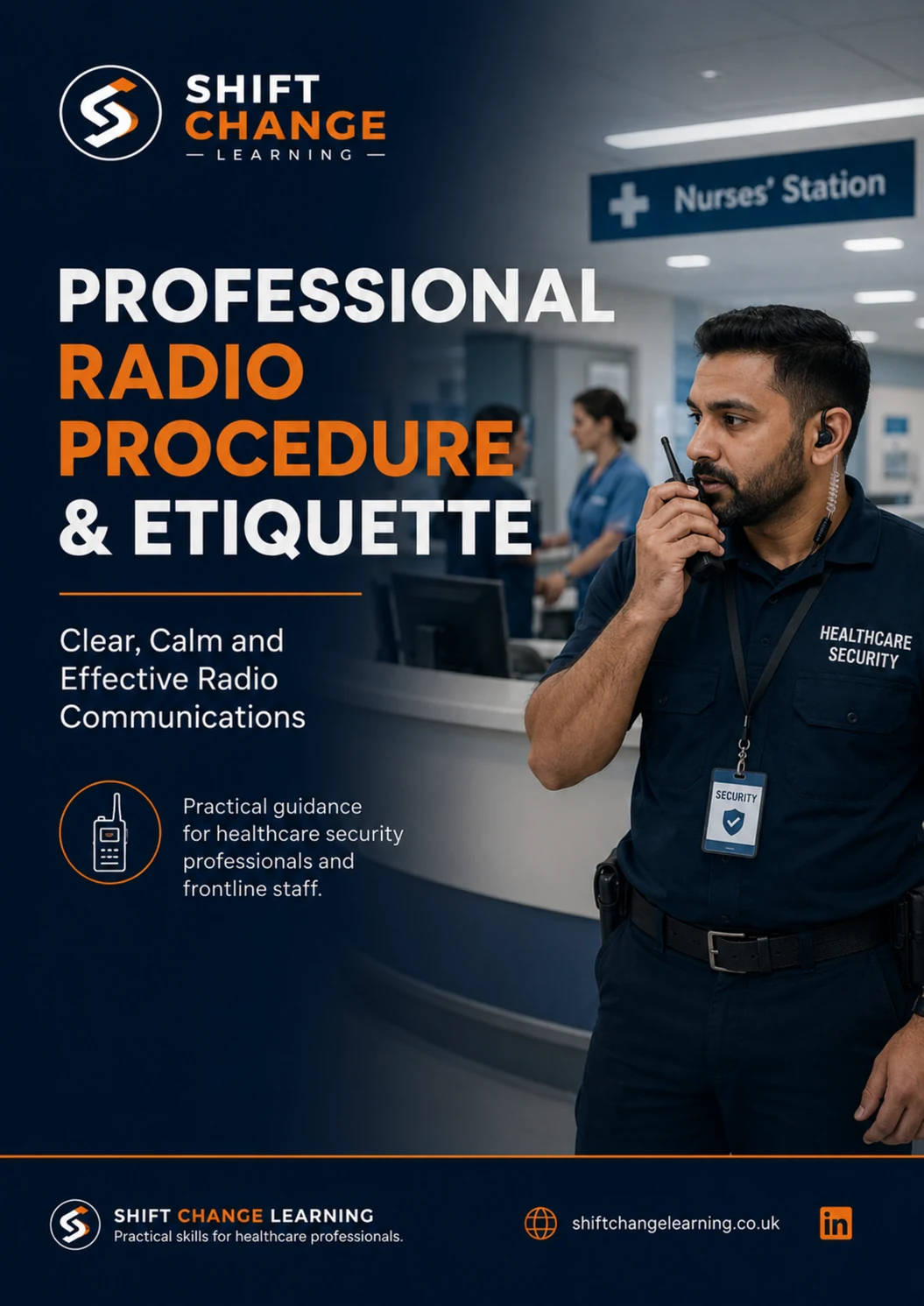
Free digital guide
A practical guide to clear, professional radio communication for healthcare security officers and teams.
Related Reading
Curated posts first, followed by wider articles that share this topic's tags.
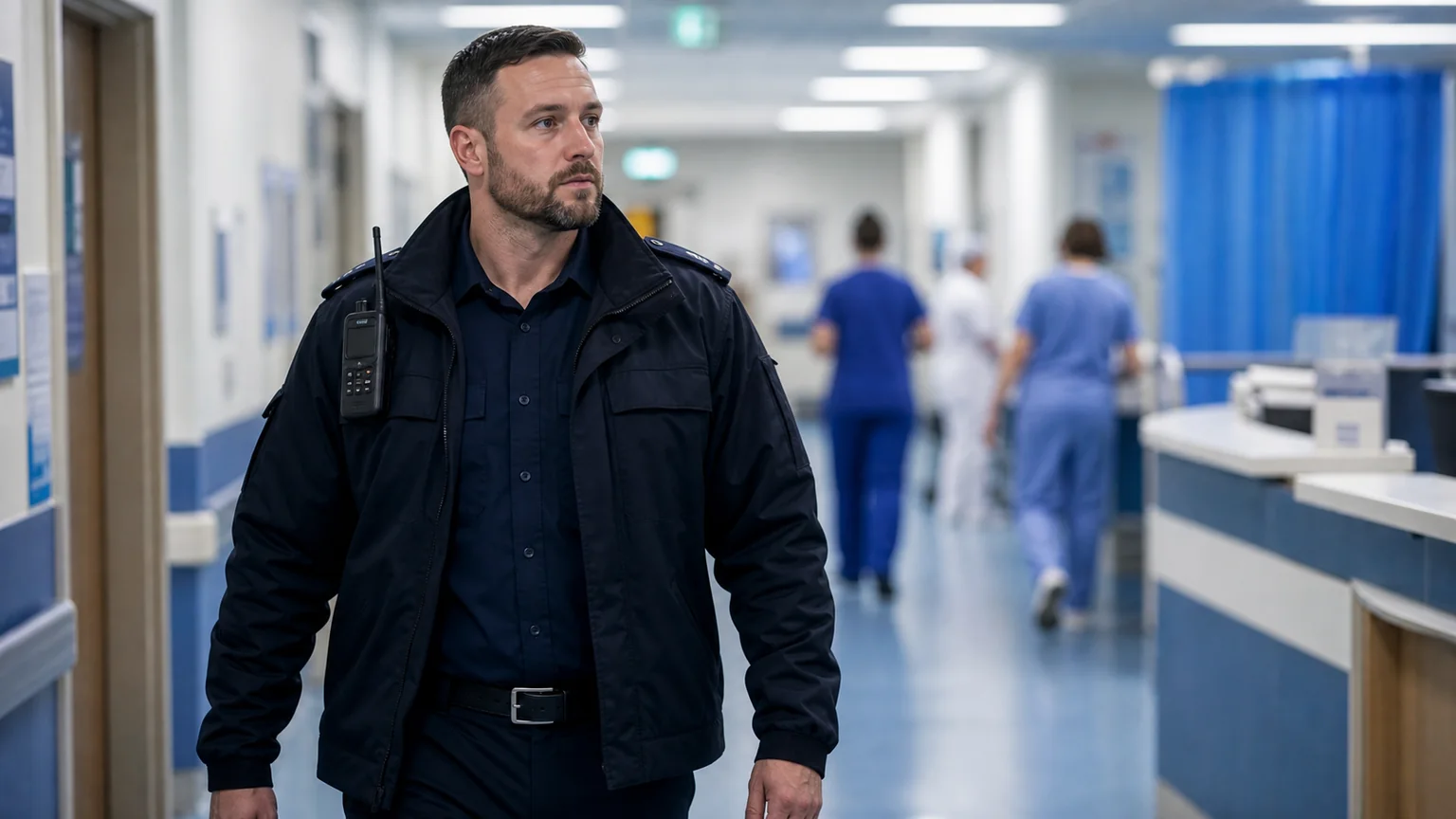
Discover what healthcare security officers really do, from patrols and CCTV to conflict management, emergency response, communication, and incident reporting.
Read article
Why healthcare security teams are managing more violence, risk, welfare concerns, communication pressure, and organisational responsibility than ever.
Read article
How AI-enabled CCTV can help healthcare security teams focus attention and respond faster while still relying on trained people, privacy, and clear governance.
Read articleFAQ
Good radio procedure is clear, brief, structured, professional, and appropriate to the sensitivity of the information being shared.
Avoid unnecessary patient details, slang, jokes, emotional commentary, speculation, and long transmissions that block urgent traffic.
It improves coordination, supports control room logs, reduces confusion, and helps the team sound calm and professional during pressure.
Next Steps